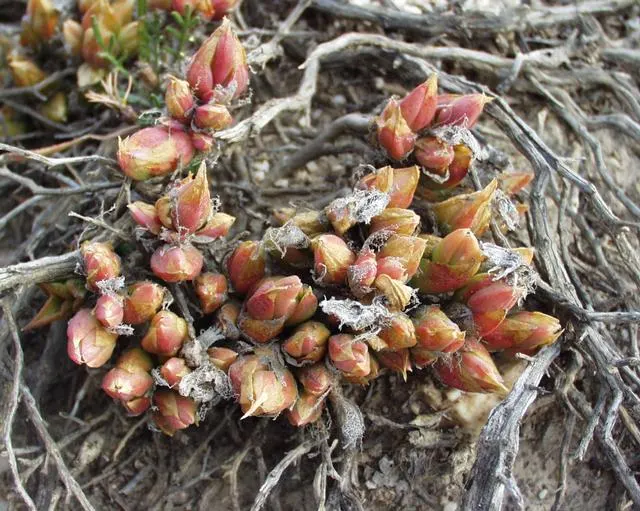
Photo: H Brisse (upload by Abalg), CC BY-SA 3.0 (via Wikimedia Commons)
Kougoed
Mesembryanthemum tortuosum
Also known as Kanna, Channa, Sceletium, Sceletium tortuosum (current botanical name), Sceletium tortuosum
Key benefits
✦Traditional uses
✦Long before it reached modern shelves, kougoed belonged to the Khoikhoi and San peoples of what is now South Africa's arid west. Its very name, from the Afrikaans for 'something to chew,' describes exactly how it was used: the leaves and stems were crushed, twisted, and left to ferment in a sealed skin bag or container, a slow process the old accounts call 'sweating,' until the plant softened and darkened. The resulting chew, or a snuff made from it, was carried on long hunts and journeys across the Karoo to ease hunger, thirst, and weariness, and was shared in social and ceremonial moments to settle the nerves and lighten the mood. Dutch colonial records from the seventeenth century already describe indigenous traders bartering it, making kougoed one of the oldest documented mood plants of southern Africa.
How to grow & use it
✦The full apothecary for Kougoed
Traditional remedies and step-by-step preparations, a complete growing guide, and how to harvest, dry, and store it, all unlocked with HerbLens Unlimited.
- ✦Remedies & preparations
- ✦ Growing guide
- ✦Harvest & storage
From under $6 a month. Free plant identifications always included.
- ✦Buchu (Agathosma betulina)
- ✦Rooibos
- ✦Chamomile, for a gentler, non-psychoactive route to calm
- ✦Lemon balm, another mild traditional favorite for settling the nerves
“For the story of a plant carried across the dry Karoo, chewed slowly to ease a long day's walk.”
The name kougoed simply means 'chew-thing' in Afrikaans, and Dutch colonial journals from as early as 1662 already record Khoikhoi traders bartering bundles of the fermented plant, making it one of the earliest mood-altering plants in the world to be documented by European observers.
Kougoed (also known as kanna, and now most often classified botanically as Sceletium tortuosum) is a genuinely psychoactive plant. Its alkaloids, chiefly mesembrine and mesembrenone, act on the body's serotonin system, and traditional preparations were valued precisely because they altered mood and mental state. For that reason, this is a plant to understand rather than to dose yourself with. It should never be combined with SSRIs, SNRIs, MAOIs, or any other serotonergic medication, as the combination carries a real risk of serotonin syndrome, a medical emergency. It is not appropriate during pregnancy or breastfeeding, is not recommended for anyone with liver disease or a history of mood or psychiatric disorders, and can impair driving or operating machinery. Its legal status and regulation as a supplement vary by country. Please speak with a qualified healthcare provider, and disclose any other medications, before considering any product containing this plant. This entry is offered for historical, botanical, and horticultural interest only.