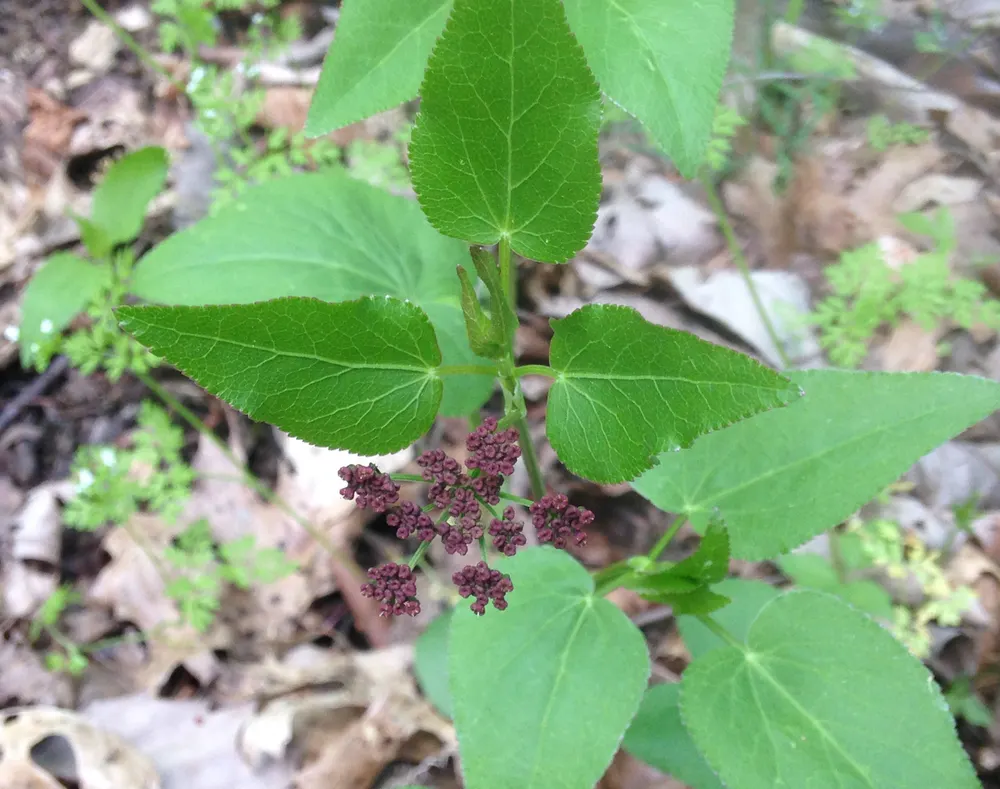
Photo: Mason Brock (Masebrock), Public domain (via Wikimedia Commons)
Meadow Parsnip
Thaspium trifoliatum
Also known as Purple Meadow Parsnip, Woodland Parsnip, Purple Meadow-Parsnip
Key benefits
✦Traditional uses
✦Meadow parsnip has never earned the deep folk-medicine or kitchen-garden reputation of some of its Apiaceae cousins, and no reliable historical record of it being brewed, eaten, or applied as a remedy has survived. What it has always been valued for is its quiet, steady presence in the eastern woodlands, where its clusters of small purple-maroon or golden-yellow flowers open just as the tree canopy begins to fill in, offering some of the first real nectar of the season to emerging bees and flies. Old-timers and modern native-plant gardeners alike have prized it less for what it can do for a person and more for what it does for a place, anchoring the understory and drawing in the insects that keep a woodland garden alive.
How to grow & use it
✦The full apothecary for Meadow Parsnip
Traditional remedies and step-by-step preparations, a complete growing guide, and how to harvest, dry, and store it, all unlocked with HerbLens Unlimited.
- ✦Remedies & preparations
- ✦ Growing guide
- ✦Harvest & storage
From under $6 a month. Free plant identifications always included.
- ✦Golden Alexanders (Zizia aurea)
- ✦Wild Columbine
- ✦Foamflower
- ✦Golden Alexanders (Zizia aurea), a close relative with a similar look and a longer documented history of garden and ethnobotanical use
“For the woodland edge that wakes up first, humming with early bees before the trees have even filled in.”
Meadow parsnip grows so closely alongside its relative Golden Alexanders that the two sometimes cross in the wild, producing a naturally occurring hybrid botanists call Thaspium x zizioides.
Meadow Parsnip is a carrot family plant with no history of food or medicinal use, and it closely resembles deadly poison hemlock and water hemlock, so it should never be foraged or eaten. Its sap, like some relatives, can also cause skin sensitivity to sunlight.