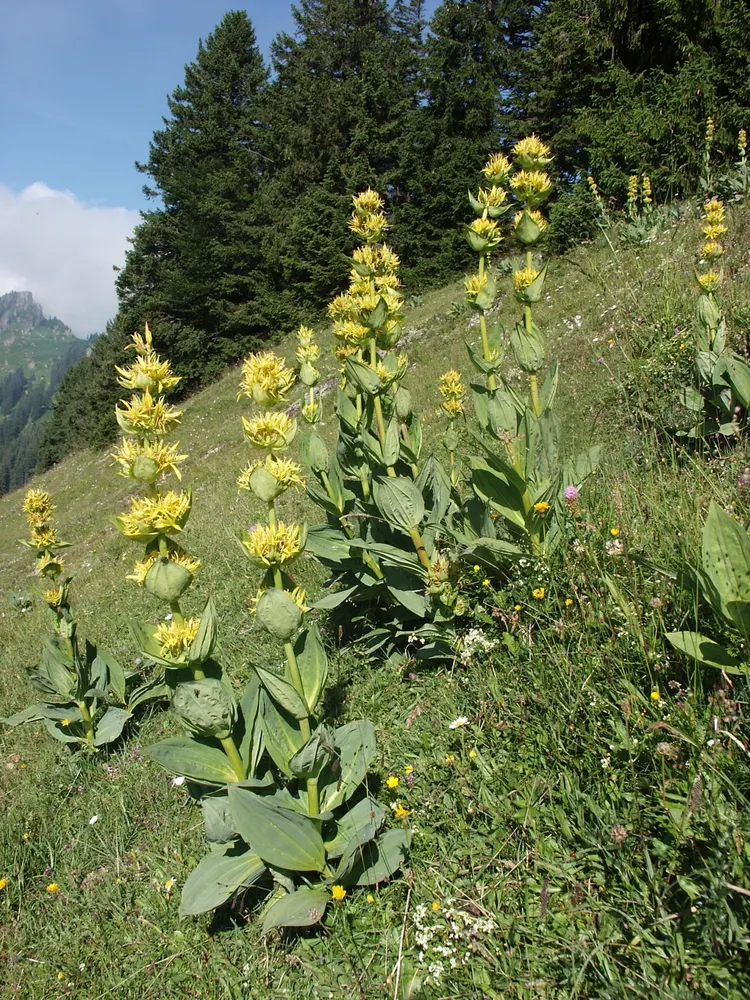
Photo: Bernd Haynold, CC BY-SA 2.5 (via Wikimedia Commons)
Great Yellow Gentian
Gentiana lutea
Also known as Yellow Gentian, Bitter Root, Bitterwort, Gentian Root
Key benefits
✦Traditional uses
✦Great Yellow Gentian is one of the oldest bitter herbs in the European apothecary, its thick golden root dug from alpine pastures and dried for use in tonics meant to wake up a tired digestion. Long before refrigeration and reliable food safety, a small dose of gentian before a meal was how many households coaxed the appetite back and settled a heavy stomach after rich or fatty food. It became the backbone of countless European bitters, amaros, and aperitifs, prized for a bitterness so pronounced that herbalists have used it for centuries as the very benchmark of what a bitter tonic should taste like. Monastery gardens and mountain villages alike kept a jar of the dried root on hand, treating it as a humble but trusted household remedy.
How to grow & use it
✦The full apothecary for Great Yellow Gentian
Traditional remedies and step-by-step preparations, a complete growing guide, and how to harvest, dry, and store it, all unlocked with HerbLens Unlimited.
- ✦Remedies & preparations
- ✦ Growing guide
- ✦Harvest & storage
From under $6 a month. Free plant identifications always included.
- ✦Wormwood
- ✦Orange Peel
- ✦Angelica Root
- ✦Dandelion Root
- ✦Angelica Root
“When a heavy meal has stalled and the appetite needs a gentle, bitter nudge back to life.”
Gentian is said to take its name from King Gentius of Illyria, who ancient writers like Pliny the Elder credited with discovering the root's medicinal value more than two thousand years ago, making it one of the few herbs whose common name is also a small piece of royal legend.
Gentian root's intense bitterness stimulates stomach acid, so it's traditionally avoided by anyone with peptic ulcers, gastritis, or acid reflux. It's also traditionally avoided during pregnancy, with high blood pressure, and for young children, and isn't meant for daily long-term use.