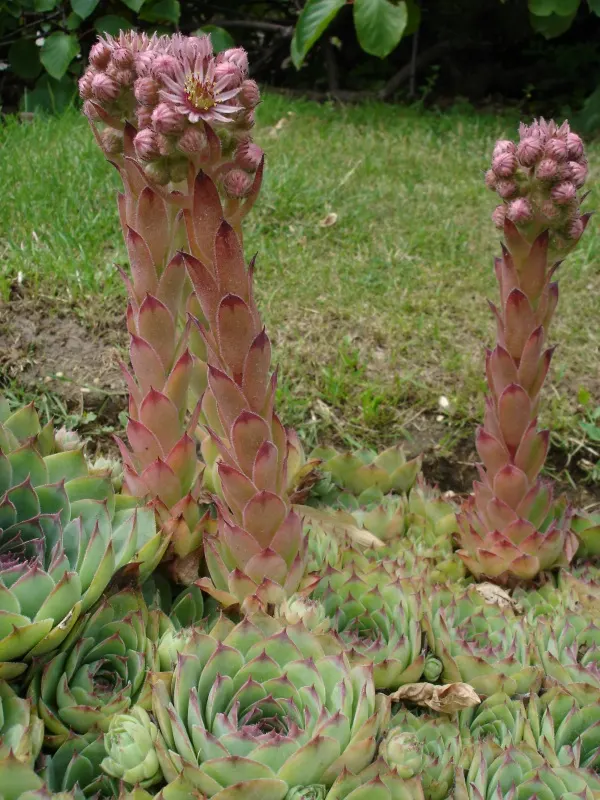
Photo: Bouba, CC BY-SA 3.0 (via Wikimedia Commons)
Mountain Houseleek
Sempervivum montanum
Also known as Alpine Houseleek, Mountain Hens and Chicks, Thunder Plant, Jupiter's Beard
Key benefits
✦Traditional uses
✦Long before it was a rock garden favorite, the mountain houseleek was a fixture of alpine cottage life, tucked into stone walls and thatched roofs across the high villages of Europe. Households prized it less as medicine and more as a household guardian, its thick, ever-green rosettes seeming to defy the thin soil and brutal weather that killed everything around them. When skin needed soothing, a leaf was split open on the spot and its cool, mucilaginous gel pressed to the sting, scrape, or sunburn, much the way aloe is used today. The plant's Latin name, sempervivum, means always living, a nod to a rosette that can be plucked, left on a shelf for weeks, and still take root.
How to grow & use it
✦The full apothecary for Mountain Houseleek
Traditional remedies and step-by-step preparations, a complete growing guide, and how to harvest, dry, and store it, all unlocked with HerbLens Unlimited.
- ✦Remedies & preparations
- ✦ Growing guide
- ✦Harvest & storage
From under $6 a month. Free plant identifications always included.
- ✦Aloe Vera
- ✦Lavender
- ✦Calendula
- ✦Aloe Vera
- ✦Sedum (stonecrop)
“For the driest, rockiest corner of the garden where nothing else will take hold, and for a cool green touch on a summer sting.”
In the year 800, Charlemagne's household decree, the Capitulare de Villis, ordered that houseleek be planted on the roof of every farmstead in his empire, since it was believed to ward off lightning and fire. Farmhouses across the Alps kept the tradition alive for centuries, tiling their roofs with living rosettes of the very plant now called the thunder plant.
Mountain houseleek is generally safe for topical use, with no significant toxicity documented; it's used on the skin rather than eaten.