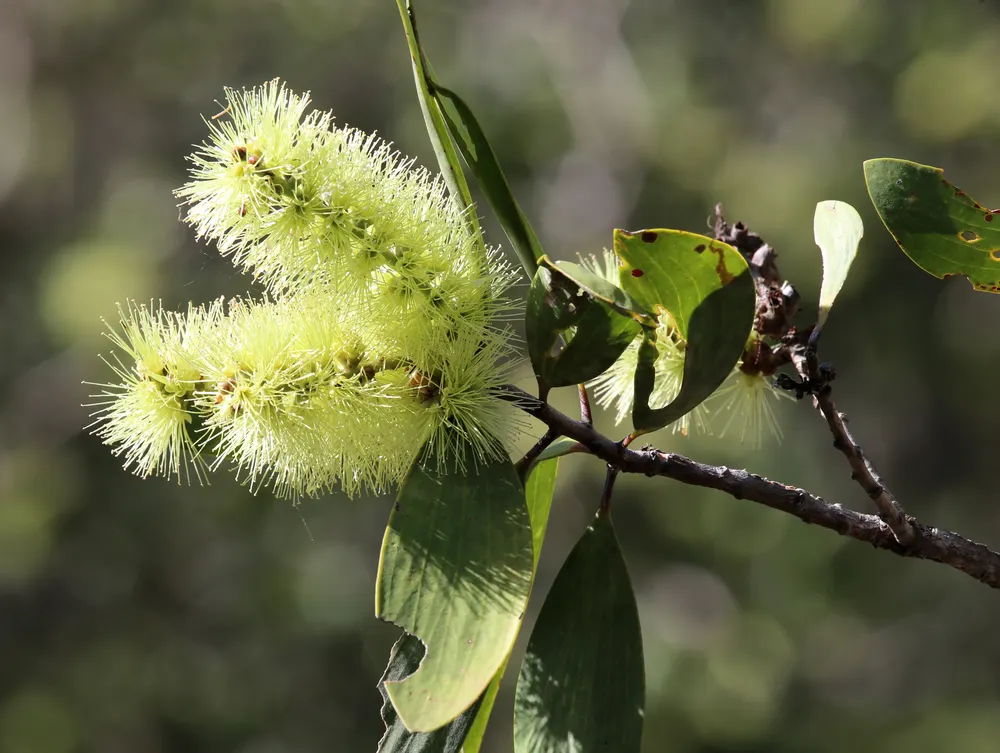
Photo: Summerdrought, CC BY-SA 4.0 (via Wikimedia Commons)
Niaouli (Broad-leaved Paperbark)
Melaleuca viridiflora
Also known as Niaouli, Broad-leaved Paperbark, Green Myrtle Melaleuca, Punk Tree
Key benefits
✦Traditional uses
✦Aboriginal peoples of northern Australia and Melanesian island communities have long turned to the crushed, camphor-scented leaves of the broad-leaved paperbark to ease coughs, colds, and fevers, steeping them into a simple tea or breathing in their steam. The tree's thick, spongy bark peels away in soft sheets and was traditionally used to wrap food for cooking, line shelters, and cushion bedding, prized for smelling clean and faintly antiseptic. French settlers in New Caledonia later distilled the leaves into an essential oil they called niaouli, and it became a familiar remedy in Pacific medicine cabinets for skin care and respiratory steams, a gentler cousin to tea tree oil. It remains valued today more for everyday comfort than as a cure for anything serious.
How to grow & use it
✦The full apothecary for Niaouli (Broad-leaved Paperbark)
Traditional remedies and step-by-step preparations, a complete growing guide, and how to harvest, dry, and store it, all unlocked with HerbLens Unlimited.
- ✦Remedies & preparations
- ✦ Growing guide
- ✦Harvest & storage
From under $6 a month. Free plant identifications always included.
- ✦Eucalyptus
- ✦Tea tree
- ✦Lemon myrtle
- ✦Tea tree (Melaleuca alternifolia)
- ✦Eucalyptus
“For the deep, camphor-sweet breath of a paperbark grove after rain.”
The name niaouli comes from a New Caledonian word, and French settlers were distilling its essential oil there as a wound antiseptic back in the 1870s, decades before tea tree oil became a household name.
The essential oil is meant for topical or aromatic use only and should never be taken internally without guidance from a qualified aromatherapist or herbalist, since concentrated melaleuca oils can be toxic if swallowed, particularly by children and pets. Always dilute the essential oil in a carrier oil before applying it to skin, and patch test first, as it can irritate sensitive skin. Avoid use during pregnancy and nursing, and around infants and very young children, unless a qualified professional advises otherwise. As with related species like tea tree, eucalyptus, and clove, those with a known Myrtaceae allergy should use caution. Talk to a qualified healthcare provider before using niaouli medicinally, especially if pregnant, nursing, or managing a health condition.