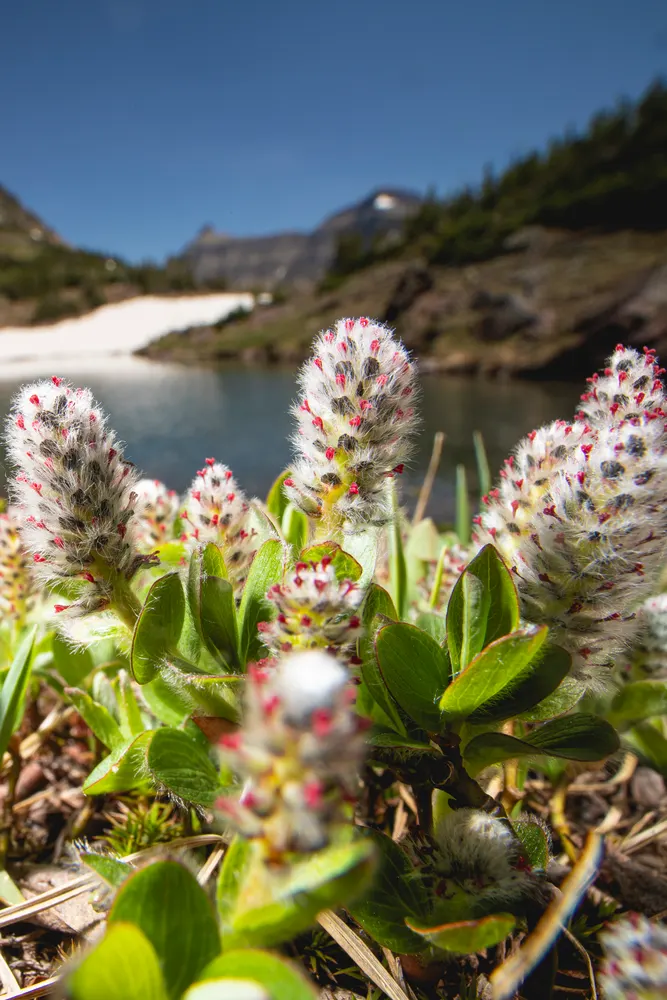
Photo: Dani.j.lombardi, CC BY-SA 4.0 (via Wikimedia Commons)
Arctic Willow
Salix arctica
Also known as Arctic Willow, Snow Willow, Dwarf Willow
Key benefits
✦Traditional uses
✦Long before willow bark became famous as the plant that gave the world aspirin, circumpolar peoples across Alaska, Canada, and Greenland were already chewing the bitter inner bark of Arctic willow to ease headaches, sore joints, and the ache of a fever. In a landscape with almost no other woody plants to draw on, this ground-hugging little shrub did double duty, its supple stems twisted into cordage and snares, its bark and buds turned to for pain relief when nothing else was at hand. Willow bark's use for pain reaches back to ancient Egypt and Greece as well, and Arctic willow carries that same salicin-rich chemistry into one of the harshest climates on Earth. It stands as a quiet reminder that even in the treeless tundra, the old remedies still found a way to grow.
Growing guide
✦Fresh to dried
✦Traditional preparations
✦Willow Bark Decoction
The traditional way to draw the salicin out of tough, fibrous bark, used historically for occasional headaches and minor aches.
How it's made. Traditionally, a decoction is made by simmering 1 teaspoon of dried inner bark in 250 ml of water for 10 to 15 minutes, then straining and sipping while warm.
Willow Bark and Honey Tea
A gentler, more palatable version of the decoction, softened with honey to offset the bark's natural bitterness.
How it's made. Strain a standard willow bark decoction as above, stir in a small spoonful of honey once cooled slightly, and sip slowly.
- ✦Meadowsweet
- ✦Ginger
- ✦Peppermint
- ✦White willow bark (Salix alba)
- ✦Meadowsweet
“When the cold outlasts every other green thing, willow still holds on.”
Arctic willow is one of the northernmost woody plants on the planet, found growing as far north as 83 degrees latitude in Greenland, closer to the North Pole than almost any other shrub or tree manages to survive.
Willow bark contains salicin, which the body converts into aspirin-like compounds, so it carries the same cautions: avoid with a salicylate allergy, blood thinners, ulcers, or in pregnancy. Children and teens recovering from a viral illness should avoid it due to the risk of Reye's syndrome.