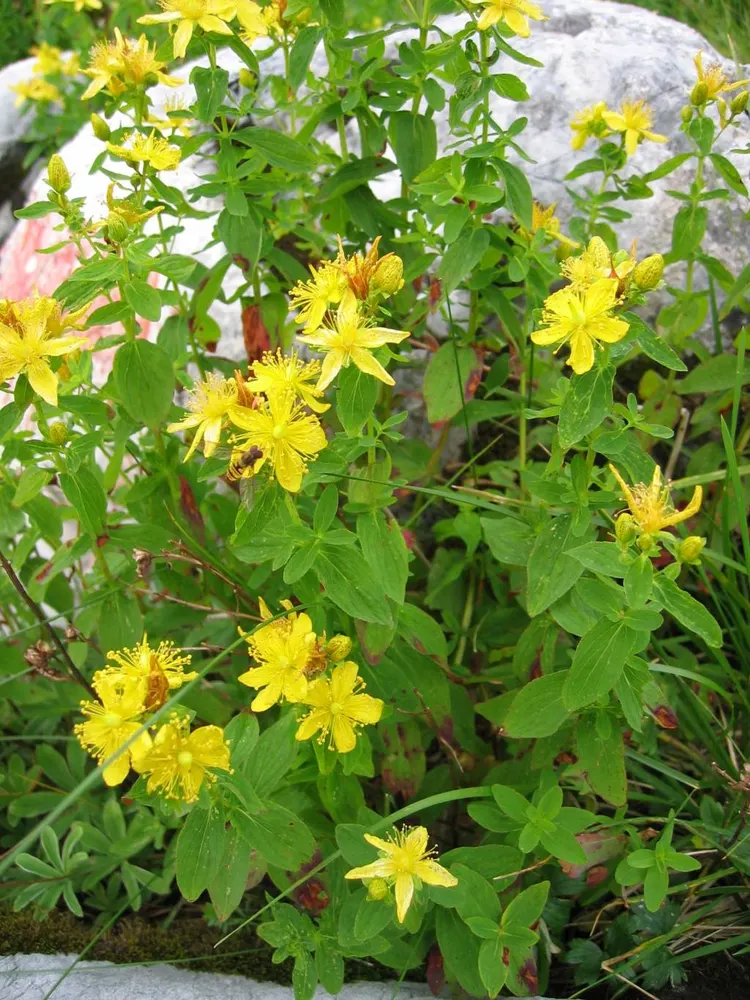
Photo: CC BY-SA 3.0 (via Wikimedia Commons)
Spotted St. John's Wort
Hypericum maculatum
Also known as Imperfect St. John's Wort, Blotted St. John's Wort, Woodland St. John's Wort
Key benefits
✦Traditional uses
✦Spotted St. John's Wort is a close cousin of the better known Hypericum perforatum, and country herbalists across Europe often gathered the two side by side, using them somewhat interchangeably. Steeped into an oil, its golden blossoms were rubbed into bruises, minor burns, and sore muscles after a long day in the fields. The plant's cheerful midsummer flowering, arriving around the feast of St. John, gave the whole genus its folkloric reputation as a bringer of light through the darker turns of the year. Village healers valued it as a humble, everyday remedy rather than a rare or ceremonial one.
How to grow & use it
✦The full apothecary for Spotted St. John's Wort
Traditional remedies and step-by-step preparations, a complete growing guide, and how to harvest, dry, and store it, all unlocked with HerbLens Unlimited.
- ✦Remedies & preparations
- ✦ Growing guide
- ✦Harvest & storage
From under $6 a month. Free plant identifications always included.
- ✦Lavender
- ✦Chamomile
- ✦Calendula
- ✦Common St. John's Wort (Hypericum perforatum)
- ✦Calendula
“A wildflower of damp meadows, carrying the sun's own gold into the darker months.”
The species name maculatum means "spotted," a nod to the small translucent dots scattered across its leaves, the very same oil-gland dots that give common St. John's Wort its botanical name perforatum, since held to the light they look like tiny perforations.
Like common St. John's Wort, this plant can cause photosensitivity (increased sunburn risk) and carries the same significant drug interactions, reducing the effectiveness of birth control, blood thinners, and antidepressants; it should never be combined with SSRIs, MAOIs, or other serotonergic drugs due to serotonin syndrome risk. Avoid during pregnancy and breastfeeding.