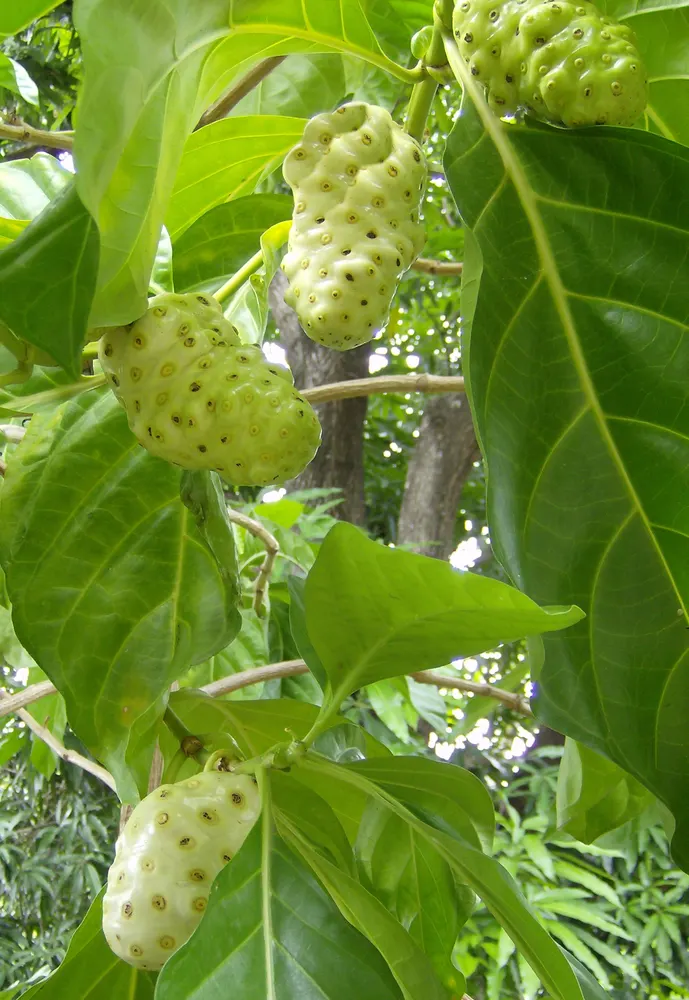
Photo: Wilfredor, CC0 (via Wikimedia Commons)
Noni
Morinda citrifolia
Also known as Indian Mulberry, Cheese Fruit, Great Morinda, Nono, Beach Mulberry
Key benefits
✦Traditional uses
✦Noni has traveled with Pacific Islanders for more than two thousand years, carried aboard voyaging canoes as one of the precious 'canoe plants' that settlers brought with them to found new island homes. Across Polynesia, Hawaii, and Southeast Asia, nearly every part of the tree found a use, but it was the ripe, pungent fruit that earned the plant its reputation as a village pharmacy, fermented into a bitter juice and taken as a general tonic for infections, fatigue, and digestive trouble. Healers also turned to the leaves as wound wraps and the root bark as a source of dye and remedy alike, making noni one of the most thoroughly used trees of the tropical Pacific.
How to grow & use it
✦The full apothecary for Noni
Traditional remedies and step-by-step preparations, a complete growing guide, and how to harvest, dry, and store it, all unlocked with HerbLens Unlimited.
- ✦Remedies & preparations
- ✦ Growing guide
- ✦Harvest & storage
From under $6 a month. Free plant identifications always included.
- ✦Ginger
- ✦Turmeric
- ✦Hibiscus
- ✦Elderberry
- ✦Goji Berry
“For a taste of the old Pacific voyaging tradition, a strong medicine wrapped in a strong-smelling fruit.”
Noni's ripe fruit gives off such a strong, cheesy odor that it earned the nickname 'vomit fruit' in some parts of the Pacific, yet Polynesian voyagers still valued it enough to carry the plant in their canoes to every island they settled.
Noni fruit and juice have been linked in rare cases to liver injury, so those with liver disease should be cautious. It is also high in potassium, which can be risky with kidney disease or potassium-sparing diuretics and ACE inhibitors.