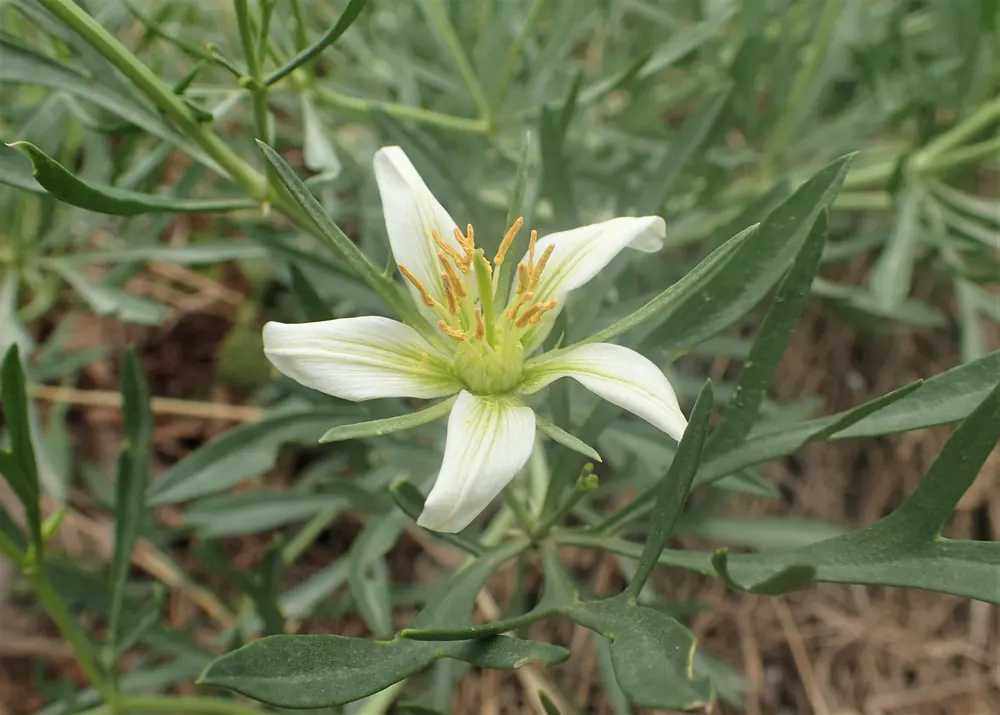
Photo: Krzysztof Ziarnek, Kenraiz, CC BY-SA 4.0 (via Wikimedia Commons)
Syrian Rue
Peganum harmala
Also known as Harmal, Wild Rue, Esfand, African Rue, Isband
Traditional uses
✦Across the arid belt from North Africa through the Middle East and into Central Asia, the dried seed capsules of Syrian rue have been burned as smoke offerings for centuries, thought by many communities to cleanse a home or ward off misfortune, a practice still visible today as strings of the rust colored pods hung over doorways in parts of Iran and Turkey under the name esfand. The seeds also yield a deep red dye once prized by weavers, giving Turkish carpets some of their most storied crimson tones. Its folk reputation as a powerful and unpredictable plant traveled alongside these uses, and healers who worked with it did so with real caution, aware that this was not a gentle kitchen herb but a plant demanding respect.
How to grow & use it
✦The full apothecary for Syrian Rue
Traditional remedies and step-by-step preparations, a complete growing guide, and how to harvest, dry, and store it, all unlocked with HerbLens Unlimited.
- ✦Remedies & preparations
- ✦ Growing guide
- ✦Harvest & storage
From under $6 a month. Free plant identifications always included.
“A plant of desert horizons and doorway smoke, admired from a careful distance.”
The vivid red dye pigment in Syrian rue seeds, called harmaline red, colored some of the most celebrated antique Persian and Anatolian rugs, and dye researchers still study the plant today for its uniquely stable crimson hue.
Syrian rue is not a plant for home remedies. Its seeds contain harmala alkaloids, including harmine and harmaline, potent monoamine oxidase inhibitors (MAOIs) that can cause dangerous, potentially fatal reactions when combined with a very long list of common medications (including antidepressants, migraine medications, and cold and allergy remedies), certain foods, and other psychoactive substances. Ingestion has caused nausea, vomiting, tremors, altered consciousness, and serious toxicity even at modest amounts, and the seeds have a documented history of use as an abortifacient, so pregnant people should avoid all contact with them. This plant should never be brewed as tea, taken as a supplement, or otherwise ingested. Any interest in Syrian rue belongs in the hands of a qualified toxicologist, physician, or pharmacologist, never in a home apothecary.