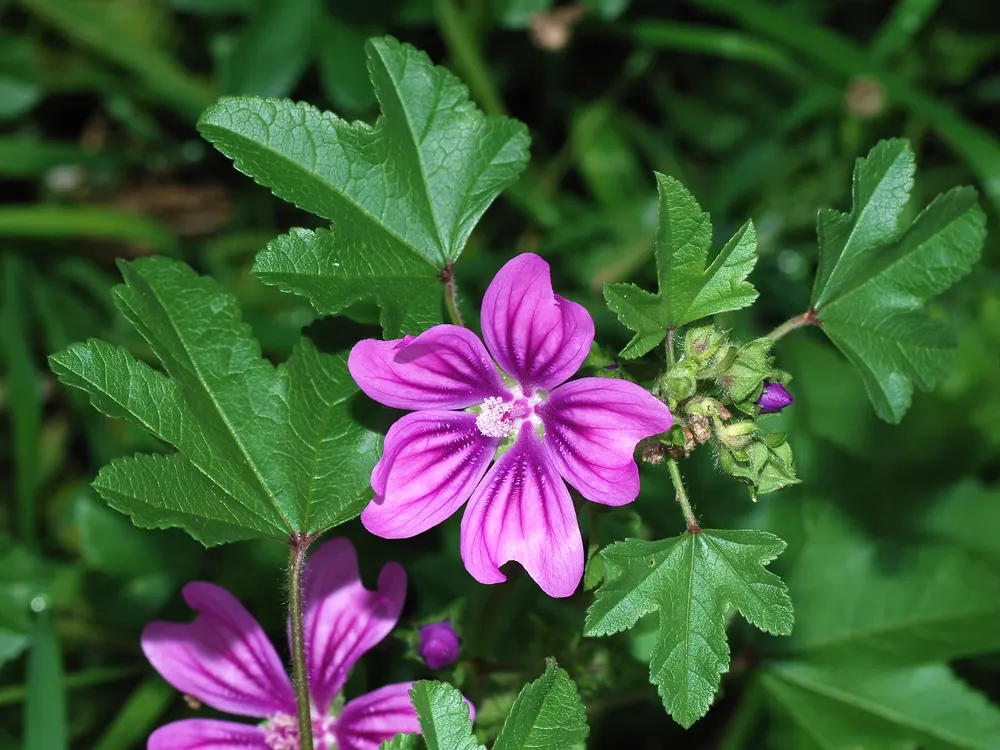
Photo: Alvesgaspar, CC BY-SA 3.0 (via Wikimedia Commons)
Common Mallow
Malva sylvestris
Also known as High Mallow, Cheese Weed, Mauve, Blue Mallow, Tree Mallow
Key benefits
✦Traditional uses
✦Common mallow has been eaten and brewed since antiquity, when the Greeks and Romans grew it in their kitchen gardens as both food and physic. Pliny the Elder wrote that a spoonful of mallow juice a day could keep a person free of illness, and cottage gardeners across Europe later kept it near the door for scraped knees and sore throats alike. Its silky, mucilage-rich leaves and flowers earned it a lasting place in the herbalist's cupboard as a gentle, coating remedy, the kind of plant grandmothers reached for before anything sharper. It traveled easily along old trade roads and now grows wild on nearly every continent, still gathered the same simple way it always was.
How to grow & use it
✦The full apothecary for Common Mallow
Traditional remedies and step-by-step preparations, a complete growing guide, and how to harvest, dry, and store it, all unlocked with HerbLens Unlimited.
- ✦Remedies & preparations
- ✦ Growing guide
- ✦Harvest & storage
From under $6 a month. Free plant identifications always included.
- ✦Marshmallow root
- ✦Licorice root
- ✦Chamomile
- ✦Marshmallow root (Althaea officinalis)
- ✦Hollyhock leaf and flower
“When a throat feels raw and a cup of tea should feel like a soft blanket.”
The dark purple veins radiating from the center of each mallow bloom act as tiny landing-strip markers, guiding bees straight to the nectar, which is part of why cottage gardeners have always found mallow patches humming with pollinators.
Common mallow is safe for most people. Large amounts may cause mild digestive looseness, and those allergic to the mallow family should use caution.