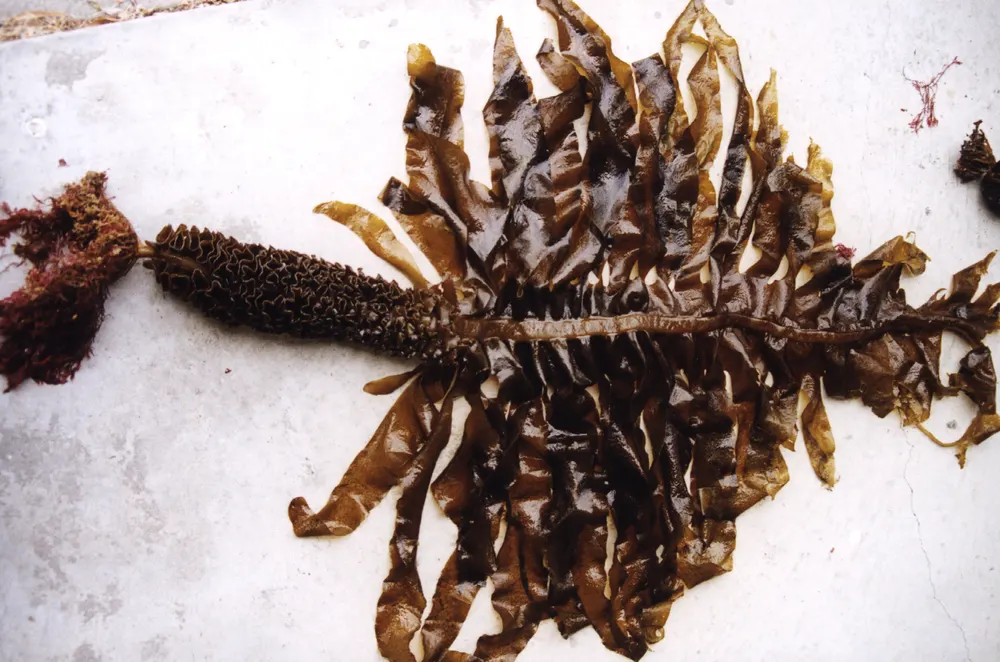
Photo: division, CSIRO, CC BY 3.0 (via Wikimedia Commons)
Wakame
Undaria pinnatifida
Also known as Sea Mustard, Japanese Kelp, Miyeok, Qundai Cai
Key benefits
✦Traditional uses
✦Wakame has been gathered and eaten along the coasts of Japan and Korea for well over a thousand years, prized as a food that nourishes blood and restores strength. In Korea, it forms the base of miyeok guk, a warming soup traditionally given to new mothers to aid recovery after childbirth. Coastal communities across East Asia also valued it as a reliable, mineral-dense food during lean winter months, when fresh vegetables were scarce.
How to grow & use it
✦The full apothecary for Wakame
Traditional remedies and step-by-step preparations, a complete growing guide, and how to harvest, dry, and store it, all unlocked with HerbLens Unlimited.
- ✦Remedies & preparations
- ✦ Growing guide
- ✦Harvest & storage
From under $6 a month. Free plant identifications always included.
- ✦Ginger
- ✦Garlic
- ✦Shiitake mushroom
- ✦Kombu
- ✦Dulse
“For the taste of the tide and a bowl that has warmed mothers and families for generations.”
In Korea, miyeok guk is eaten not only by new mothers after childbirth but by nearly everyone on their birthday each year, a quiet yearly tribute to the mother who once ate it to recover after giving birth to them.
Wakame is a safe traditional food in normal culinary amounts, but it is very high in iodine, so people with thyroid conditions or on thyroid medication should be cautious, and pregnant or breastfeeding individuals should keep servings modest.