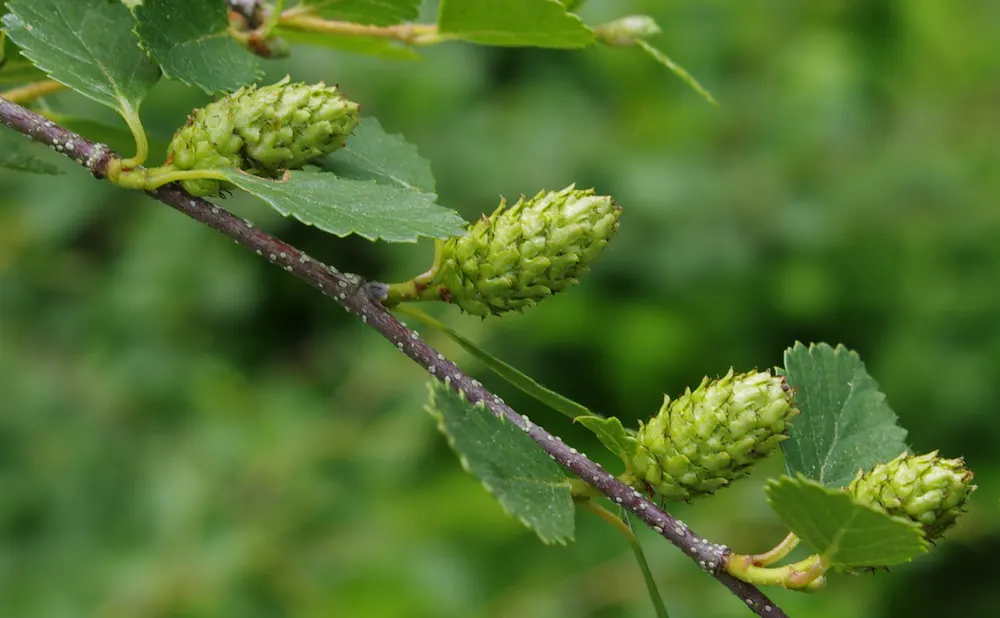
Photo: El Grafo, CC BY-SA 3.0 (via Wikimedia Commons)
Dwarf Birch
Betula glandulosa
Also known as Bog Birch, Resin Birch, Glandular Birch, Scrub Birch, Shrub Birch
Key benefits
✦Traditional uses
✦Dwarf birch is a small, hardy shrub of the far north, so low and wind-pruned across the tundra that caribou and moose graze it like grass. Northern Indigenous peoples across Alaska and Canada have long relied on it for practical, everyday needs, its resinous, glandular twigs catching a spark quickly as tinder, and its wiry branches bundled into brooms and snowshoe lashings. Like its taller birch cousins across the boreal world, its leaves have also been steeped into a simple tea in some northern communities, part of a much wider birch-leaf tradition of gentle, everyday tonic teas used to support the kidneys and ease stiff joints after a hard season of work. It is a plant defined less by grand medicinal fame and more by quiet, constant usefulness.
How to grow & use it
✦The full apothecary for Dwarf Birch
Traditional remedies and step-by-step preparations, a complete growing guide, and how to harvest, dry, and store it, all unlocked with HerbLens Unlimited.
- ✦Remedies & preparations
- ✦ Growing guide
- ✦Harvest & storage
From under $6 a month. Free plant identifications always included.
- ✦Stinging Nettle
- ✦Dandelion Leaf
- ✦Yarrow
- ✦Silver Birch (Betula pendula) leaf
- ✦Downy Birch (Betula pubescens) leaf
“For the quiet, hardy green of the far north, low to the ground and built to outlast the wind.”
Because dwarf birch pollen is so distinctive and long-lived in lake and peat sediments, scientists use layers of it to mark the sudden return of arctic cold during the Younger Dryas, a nearly 1,300-year cold snap at the end of the last ice age, making this humble shrub one of the plant world's most trusted timekeepers.
No significant toxicity is documented, but those with birch pollen allergy may notice oral itching from raw plant parts. Birch leaf has a diuretic effect, so it is best avoided with kidney disease, diuretic medication, or pregnancy without medical guidance.