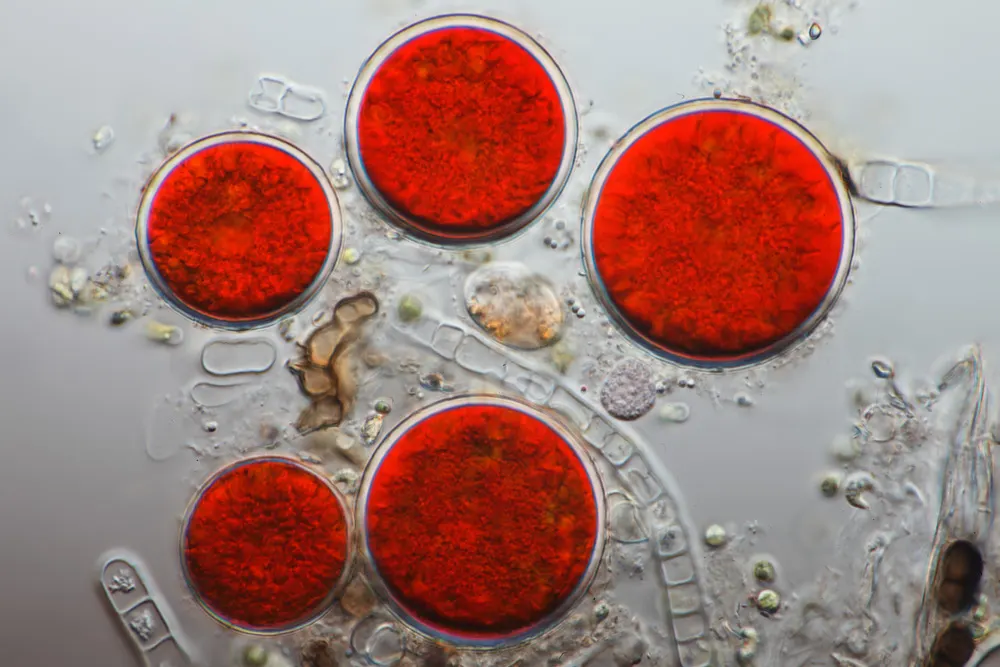
Photo: Frank Fox, CC BY-SA 3.0 de (via Wikimedia Commons)
Rain Pool Algae
Haematococcus pluvialis
Also known as Blood Rain Algae, Astaxanthin Algae, Hematococcus
Key benefits
✦Traditional uses
✦Haematococcus pluvialis is not an old herbal remedy in the way echinacea or chamomile are. It is a tiny green algae that naturalists noticed for centuries turning rain puddles and stone hollows a startling blood red, a phenomenon that gave rise to old folk tales of blood rain long before anyone understood the cause. Only in the twentieth century did scientists identify that red color as astaxanthin, one of the most concentrated natural antioxidant pigments known, and the algae has since become a cornerstone of modern nutraceutical and skincare practice rather than a plant of ancient apothecary tradition. Today it is cultivated deliberately, stressed under bright light and scarce nutrients until it turns that same deep red, then harvested for its pigment.
How to grow & use it
✦The full apothecary for Rain Pool Algae
Traditional remedies and step-by-step preparations, a complete growing guide, and how to harvest, dry, and store it, all unlocked with HerbLens Unlimited.
- ✦Remedies & preparations
- ✦ Growing guide
- ✦Harvest & storage
From under $6 a month. Free plant identifications always included.
- ✦Omega-3 fish oil
- ✦Turmeric
- ✦Rose hips
- ✦Spirulina
- ✦Goji berry
“For the deepest red an antioxidant can turn, born from a puddle that dries under the sun and refuses to fade quietly.”
The pink of a flamingo's feathers and the rosy flesh of wild salmon both trace back to carotenoid pigments like the astaxanthin this little algae produces, absorbed up through the food chain from the tiny creatures that graze on it.
Astaxanthin supplements from this algae are generally well tolerated, though they may modestly lower blood pressure, so use caution with blood pressure medication. Never gather red algae from wild ponds or puddles yourself, since it's genuinely hard to tell apart from toxic cyanobacteria blooms; buy from a reputable supplement source instead.