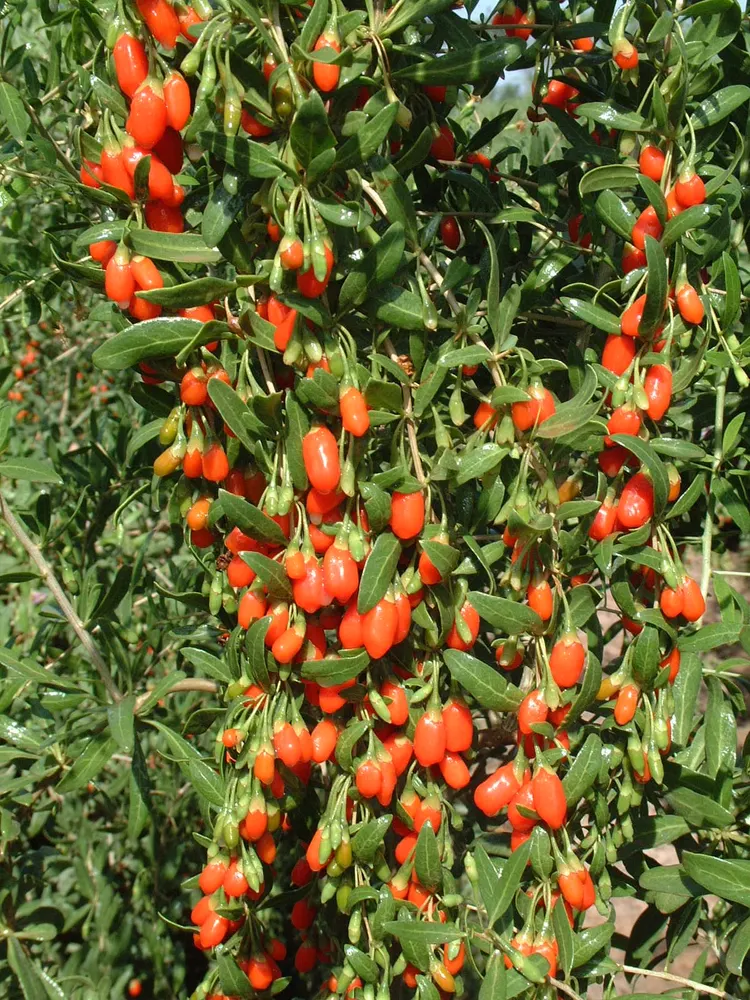
Photo: Paul Gross (paul144) and Richard Zhang, Public domain (via Wikimedia Commons)
Goji Berry
Lycium barbarum
Also known as Wolfberry, Chinese Wolfberry, Matrimony Vine, Gou Qi Zi, Chinese Boxthorn
Key benefits
✦Traditional uses
✦In Traditional Chinese Medicine, the dried berries, known as gou qi zi, have been used for well over a thousand years as a gentle tonic for the liver and kidneys, prized for brightening the eyes and steadying long-term vitality. They were traditionally simmered into tonic soups and porridges for elders and convalescents, valued as a food that nourished rather than a medicine that forced. Folklore from the Ningxia region even tells of a legendary herbalist said to have lived to a remarkable old age on a daily habit of goji tea, a story still told to explain the berry's reputation for longevity.
How to grow & use it
✦The full apothecary for Goji Berry
Traditional remedies and step-by-step preparations, a complete growing guide, and how to harvest, dry, and store it, all unlocked with HerbLens Unlimited.
- ✦Remedies & preparations
- ✦ Growing guide
- ✦Harvest & storage
From under $6 a month. Free plant identifications always included.
- ✦Chrysanthemum flower
- ✦Red dates (jujube)
- ✦Astragalus root
- ✦Dried mulberries
- ✦Schisandra berries
“For the quiet, ruby-bright pick-me-up steeped at the end of a long day.”
The name wolfberry is a curious mistranslation, an old English rendering of the Latin genus Lycium, which itself echoes lykion, a name the ancient Greeks used for a thorny shrub, not because wolves have anything to do with the berry at all.
Goji berries can interact with warfarin and other blood thinners, with case reports of increased bleeding risk, and may affect blood sugar or blood pressure medications. As a nightshade relative, they can rarely trigger allergic cross-reactivity in people sensitive to tomato or tobacco.