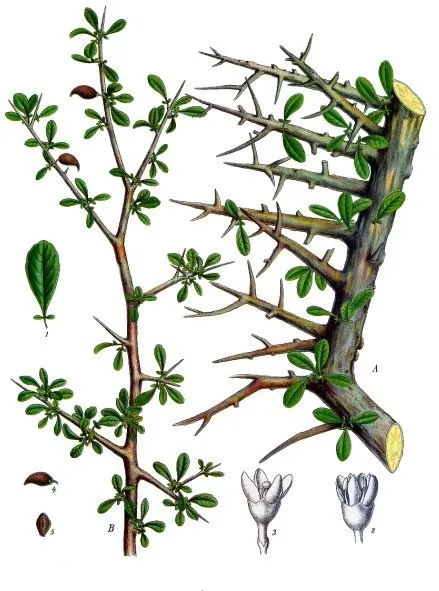
Photo: Franz Eugen Köhler, Köhler's Medizinal-Pflanzen, Public domain (via Wikimedia Commons)
Myrrh
Commiphora myrrha
Also known as Common Myrrh, Somali Myrrh, Herabol Myrrh, Gum Myrrh
Key benefits
✦Traditional uses
✦Myrrh has been gathered from cracked desert bark for well over four thousand years, carried along incense caravan routes where it was once weighed against gold and silver. Ancient Egyptian embalmers packed it into linen wrappings, and it turns up in the medical papyri as a wound dressing and digestive remedy. Ayurvedic and traditional Chinese medicine both adopted it independently, prizing it for supporting the mouth, skin, and joints, while Mediterranean and Middle Eastern healers relied on tinctures of the resin to calm irritated gums and settle a troubled stomach. Its bitter, balsamic bite made it as much a medicine cabinet staple as a temple offering.
How to grow & use it
✦The full apothecary for Myrrh
Traditional remedies and step-by-step preparations, a complete growing guide, and how to harvest, dry, and store it, all unlocked with HerbLens Unlimited.
- ✦Remedies & preparations
- ✦ Growing guide
- ✦Harvest & storage
From under $6 a month. Free plant identifications always included.
- ✦Clove
- ✦Goldenseal
- ✦Echinacea
- ✦Frankincense
- ✦Benzoin
“For a resin dark with age and smoke, carried by caravans before it was ever carried by kings.”
Myrrh was one of the three gifts carried by the Magi in the Nativity story, but it had already been treasured for over two thousand years by then, ancient Egyptian embalmers used it to pack mummies, and its trade helped build the wealth of the old incense-route kingdoms of southern Arabia.
Traditionally regarded as a uterine stimulant, so avoid during pregnancy and breastfeeding. It is used only in small diluted amounts and not swallowed, and may interact with blood-thinning or blood sugar medications; patch test before topical use, as it can irritate sensitive skin.