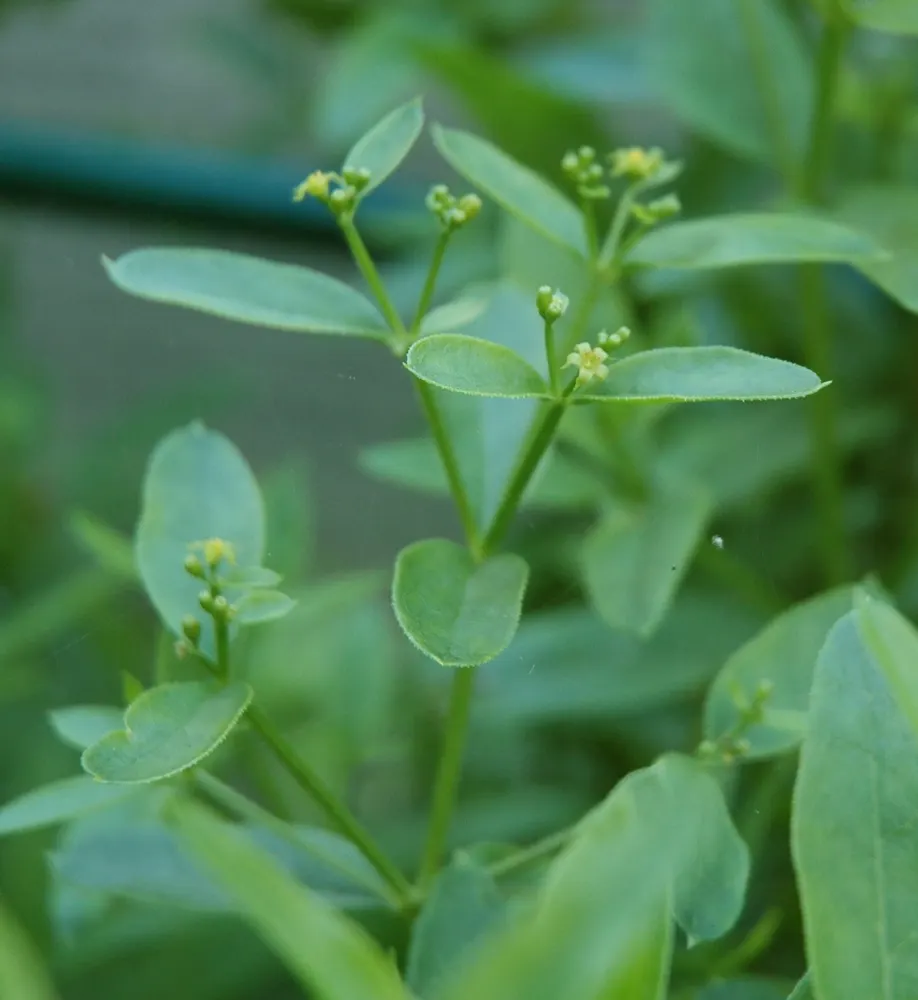
Photo: Carstor, CC BY-SA 3.0 (via Wikimedia Commons)
Madder (Common Madder)
Rubia tinctorum
Also known as Dyer's Madder, Rose Madder, Turkey Red, Garance
Traditional uses
✦Madder root is one of the oldest dye plants in human history, prized for millennia for the deep, warm reds, oranges, and pinks it lends to wool, cotton, and linen. Traces of madder dye have been found on cloth wrapped around Egyptian mummies and on textiles from Indus Valley sites thousands of years old. Long before synthetic dyes existed, entire trade networks and village economies grew up around cultivating and processing this unassuming, scrambling little plant. Herbalists of earlier centuries also turned to the root for kidney and bladder complaints, though this particular use has since fallen out of favor as understanding of the plant's chemistry has grown.
How to grow & use it
✦The full apothecary for Madder (Common Madder)
Traditional remedies and step-by-step preparations, a complete growing guide, and how to harvest, dry, and store it, all unlocked with HerbLens Unlimited.
- ✦Remedies & preparations
- ✦ Growing guide
- ✦Harvest & storage
From under $6 a month. Free plant identifications always included.
- ✦Woad
- ✦Weld
- ✦Alkanet root
- ✦Cochineal
“A root that colored the world red before chemistry ever tried.”
Madder gave the world 'Turkey Red,' a legendarily rich, colorfast red dye so prized that European dyers spent centuries trying to replicate the elaborate Ottoman and Indian processes used to produce it, some of which took weeks and involved dozens of steps.
Compounds in madder root, including lucidin, have shown genotoxic and potentially carcinogenic effects, which led European regulators to withdraw it as a food colorant. It is not recommended for internal use and should be avoided during pregnancy and by anyone with kidney concerns; today it is used mainly as a fiber dye.