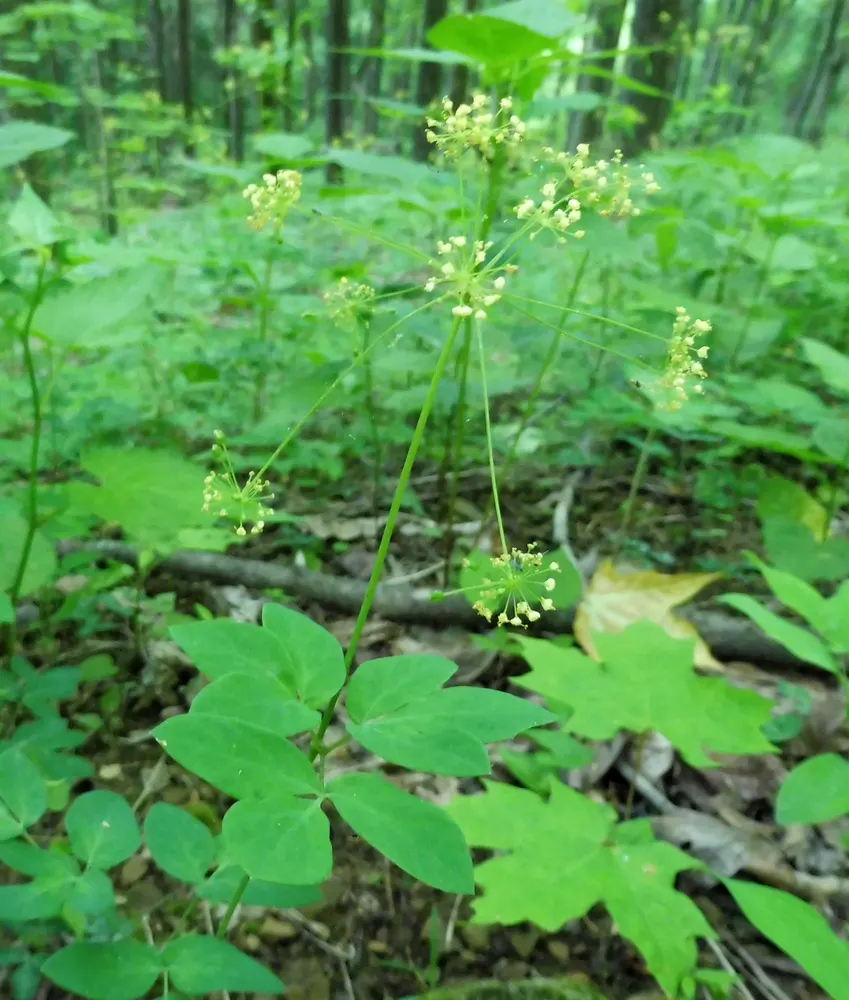
Photo: Mason Brock (Masebrock), Public domain (via Wikimedia Commons)
Yellow Pimpernel
Taenidia integerrima
Also known as Smooth Yellow Pimpernel, Prairie Pimpernel
Key benefits
✦Traditional uses
✦Yellow pimpernel doesn't carry the long medicinal resume of many of its carrot-family cousins. Early botanists and prairie naturalists valued it more for its cheerful, early gold color against bare rock and thin soil than for any tonic or remedy, and it never entered the herbal pharmacopoeias the way angelica or lovage did. What traditional value it holds is largely ecological, since its small yellow umbels are among the first Apiaceae blooms to open along rocky woodland edges each year, offering nectar to small bees and flies just emerging from winter. Today it is prized chiefly by native plant gardeners and wildflower enthusiasts for that same quiet, early presence rather than for any household or medicinal use.
How to grow & use it
✦The full apothecary for Yellow Pimpernel
Traditional remedies and step-by-step preparations, a complete growing guide, and how to harvest, dry, and store it, all unlocked with HerbLens Unlimited.
- ✦Remedies & preparations
- ✦ Growing guide
- ✦Harvest & storage
From under $6 a month. Free plant identifications always included.
“For the rocky, sun-baked corner of a native garden that wants its first spark of gold before anything else has woken up.”
The species name integerrima means 'most entire' in Latin, referring to the smooth, untoothed edges of its leaflets. That detail is exactly what botanists use to tell it apart from its similar-looking, toothed-leaved relative, golden alexanders.
Yellow Pimpernel is a carrot family plant that closely resembles deadly poison hemlock and water hemlock, and it has no history of food or medicinal use, so it should never be foraged or eaten without expert identification.