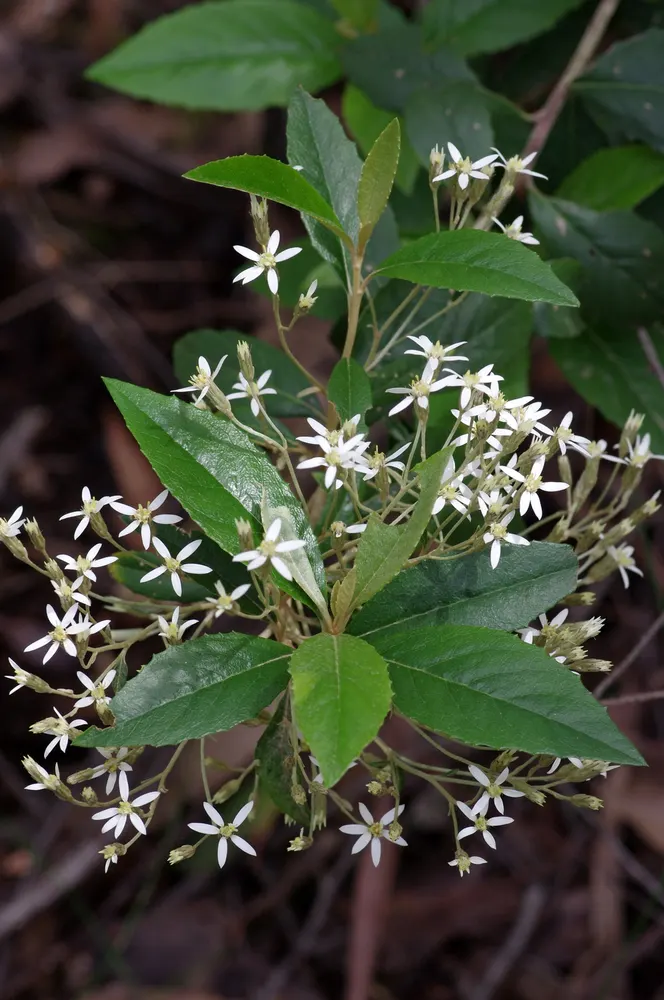
Photo: DavidFrancis34 from Australia, CC BY-SA 2.0 (via Wikimedia Commons)
Musk Daisy Bush
Olearia argophylla
Also known as Musk Tree, Silver Daisy Bush
Key benefits
✦Traditional uses
✦Musk Daisy Bush earned its common name from the distinct musky scent that rises off its foliage, especially in damp forest air after rain. Tasmanian and Victorian settlers came to know it as a rainforest gap filler, a fast grower that shot up in clearings and forest edges, and its close-grained, handsomely marked wood was prized by colonial cabinetmakers for furniture and turned work. It has never been a kitchen or medicine cabinet herb, its story belongs to the forest and the workshop rather than the teapot.
How to grow & use it
✦The full apothecary for Musk Daisy Bush
Traditional remedies and step-by-step preparations, a complete growing guide, and how to harvest, dry, and store it, all unlocked with HerbLens Unlimited.
- ✦Remedies & preparations
- ✦ Growing guide
- ✦Harvest & storage
From under $6 a month. Free plant identifications always included.
- ✦Tasmanian tree fern
- ✦Native correa
- ✦Pittosporum
- ✦Dusty daisy bush (Olearia phlogopappa)
- ✦Olearia stellulata
“For the shaded, damp corner of a garden that wants a fragrant, silver backed understory tree with the feel of a rainforest edge.”
The species name argophylla comes from the Greek for silver leaved, a nod to the felted, silvery white undersides of its leaves that flash and shimmer whenever the wind turns them over in the forest canopy.
Musk daisy bush has no history of food or medicinal use, so don't eat or brew it, and keep it away from children and pets who might chew the foliage.