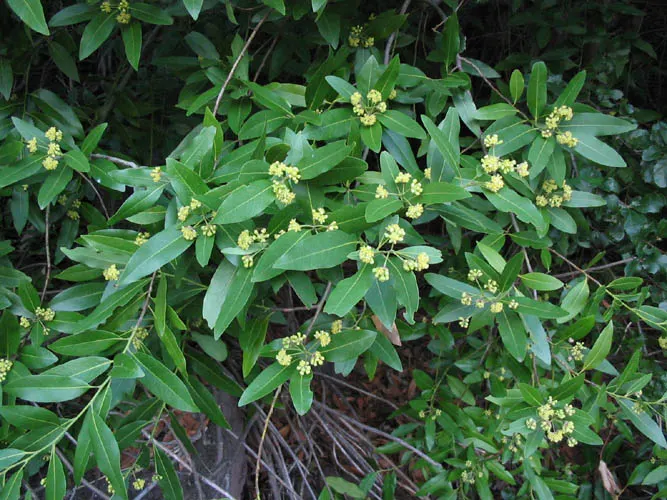
Photo: Public domain (via Wikimedia Commons)
California Bay Laurel
Umbellularia californica
Also known as Oregon Myrtle, Pepperwood, California Laurel, Headache Tree
Key benefits
✦Traditional uses
✦Long before it appeared in California kitchens, this tree was a trusted companion to the region's Native peoples. The Pomo, Yuki, and Karuk, among others, held crushed leaves to the nose to help clear a stuffy head, brewed a light leaf tea for colds and upset stomachs, and warmed aching joints with the foliage. The oily nuts were roasted, ground, and eaten as a nourishing food, sometimes brewed as a coffee-like drink. Today the tree is best known for its leaf, a cousin to the Mediterranean bay leaf but considerably bolder, which still flavors soups, stews, and braises across the West Coast.
How to grow & use it
✦The full apothecary for California Bay Laurel
Traditional remedies and step-by-step preparations, a complete growing guide, and how to harvest, dry, and store it, all unlocked with HerbLens Unlimited.
- ✦Remedies & preparations
- ✦ Growing guide
- ✦Harvest & storage
From under $6 a month. Free plant identifications always included.
- ✦Mediterranean bay laurel
- ✦Rosemary
- ✦Sage
- ✦Mediterranean bay leaf (use about half as much)
- ✦Juniper berry
“When your kitchen wants the forest's boldest bay leaf, or your tea wants a whisper of California history.”
The crushed leaves release a compound called umbellulone that can trigger a sudden, sharp headache or a fit of sneezing in some people on contact, which is exactly how this tree earned the nickname "headache tree," even as Native Californians made careful, traditional use of that same pungent aroma to clear a stuffy head.
The leaves and their essential oil are strong enough to trigger sudden headaches or nasal irritation when crushed and inhaled, so use it sparingly, especially if you're prone to migraines. It is much more potent than culinary bay leaf, and the whole leaf should be removed before eating since it does not soften and can scratch or choke.