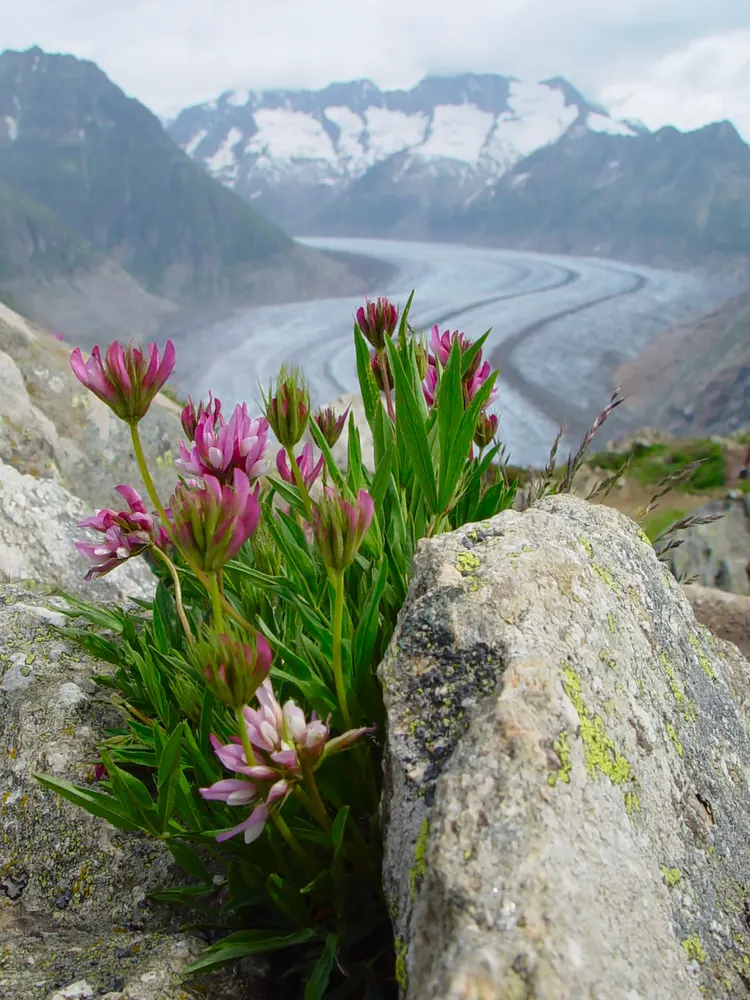
Photo: Josef Steufer, CC BY 2.0 (via Wikimedia Commons)
Alpine Clover
Trifolium alpinum
Also known as Alpine Trefoil, Trèfle des Alpes, Alps Licorice Clover
Key benefits
✦Traditional uses
✦Long before it had a place in any herbal, Alpine clover was known to the shepherds and herders who spent their summers driving flocks up into the high pastures of the Alps. They dug its slender roots, washed them in a mountain stream, and chewed them slowly for the sweet, licorice-like taste hidden inside, a small comfort on a long climb. In French-speaking valleys the plant earned the nickname 'petit réglisse,' or little licorice, for exactly this reason. It was never a formal medicine so much as a trusted companion of the high trail, valued for its sweetness, its cheerful pink blooms, and its willingness to thrive where almost nothing else would.
Growing guide
✦Fresh to dried
✦Traditional preparations
✦Traditional Trail Root
The oldest and simplest use of Alpine clover: chewing the fresh root for its sweet, licorice-like flavor, much as Alpine herders did to ease thirst and weariness on long treks through the high pastures.
How it's made. Wash a small, finger-sized piece of fresh root well. Chew it slowly to release its sweetness, then spit out the fibrous pulp once the flavor fades, in the same unhurried way mountain shepherds once did.
Mild Root Tea
A gentle, lightly sweet infusion made in the same spirit as other sweet-rooted herbal teas, using a small amount of the dried root.
How it's made. Traditionally, a small piece of dried root, about one teaspoon chopped fine, is simmered gently in 250 ml of water for 5 to 10 minutes, then strained before drinking.
- ✦Licorice root
- ✦Mountain mint
- ✦Wild thyme
- ✦Licorice root (Glycyrrhiza glabra)
- ✦Red clover (Trifolium pratense)
“For the wild, high-mountain green that carries the memory of old shepherd trails and alpine pastures in a single sweet root.”
In the French Alps, shepherds so prized Alpine clover's sweet root that they nicknamed it 'petit réglisse,' or little licorice, and carried it as a natural trailside treat on the long climb to summer pastures.
Clover species, including alpine clover, contain coumarin-like compounds that can act as a mild blood thinner, so use caution if you take warfarin or other blood-thinning medication. Confirm identification before foraging, since it grows alongside similar small pink-flowered plants.