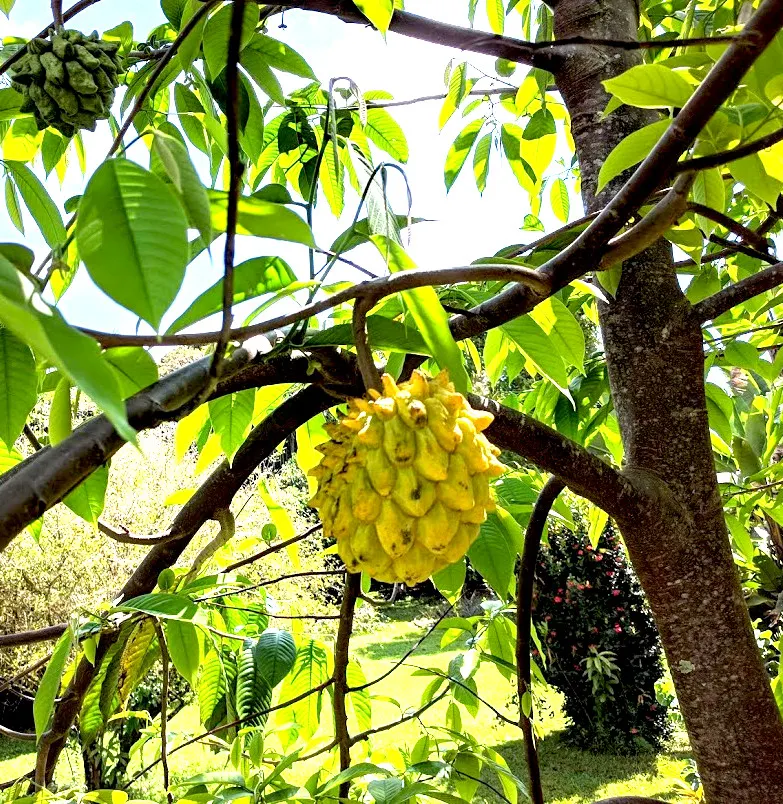
Photo: 申義徳博士, CC BY-SA 4.0 (via Wikimedia Commons)
Biriba
Rollinia mucosa
Also known as Wild sugar apple, Biribá, Amazon custard apple, Annona mucosa, Rollinia
Key benefits
✦Traditional uses
✦Long before biriba ever left the Amazon, it was a market-day treasure in Brazil, prized for a custardy, lemon-meringue sweetness that made it a favorite trailside and riverside snack. Amazonian and Brazilian households have traditionally eaten the ripe fruit as a refreshing, nourishing treat believed to settle the stomach and lift flagging energy after a long day of work in the heat. Because the fruit bruises and spoils within a day or two of ripening, it rarely traveled far from where it grew, which kept it a beloved regional secret rather than a widely known global fruit. It remains, to this day, a fruit people speak of the way they speak of a favorite grandmother's cooking, something tied to a particular place and season.
How to grow & use it
✦The full apothecary for Biriba
Traditional remedies and step-by-step preparations, a complete growing guide, and how to harvest, dry, and store it, all unlocked with HerbLens Unlimited.
- ✦Remedies & preparations
- ✦ Growing guide
- ✦Harvest & storage
From under $6 a month. Free plant identifications always included.
- ✦Passion fruit
- ✦Lime
- ✦Mint
- ✦Soursop (Annona muricata)
- ✦Cherimoya (Annona cherimola)
“For a taste of the Amazon itself, soft, sweet, and tangy, gone from the tree to the table before it ever sees a shelf.”
Biriba's soft, bumpy green skin makes it look almost like a plush toy version of a custard apple, and its flesh is often compared to lemon meringue pie. Botanists have since folded the genus Rollinia into Annona based on genetic studies, so you will now sometimes see this same tree labeled Annona mucosa on nursery tags and in newer field guides.
The ripe fruit is a safe, widely eaten food, but the seeds are toxic if crushed or chewed and should never be eaten; the leaves and bark are not well studied for internal use.