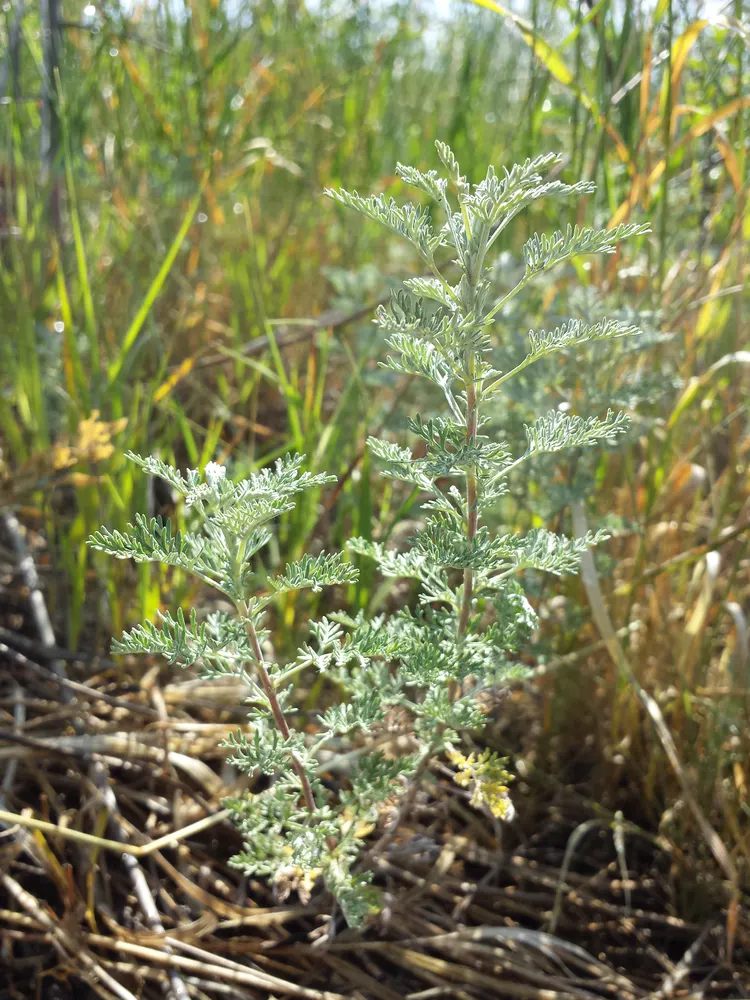
Photo: Stefan.lefnaer, CC BY-SA 3.0 at (via Wikimedia Commons)
Roman Wormwood
Artemisia pontica
Also known as Roman Wormwood, Small Absinthe, Pontic Wormwood, Petite Absinthe
Key benefits
✦Traditional uses
✦Roman wormwood takes its name from Pontus, the old Black Sea kingdom where it grew wild along dry hillsides, and it has flavored European bitters and aperitifs for centuries. Milder and sweeter than its cousin grande wormwood, it was the herb of choice for household tonics meant to be sipped rather than endured, a small cup taken before a heavy meal to wake up a sluggish appetite. It became one of the signature botanicals in traditional vermouth, lending the drink both its gentle bitterness and, indirectly, its very name. In old kitchen gardens across Central and Eastern Europe, a few leaves tucked into a jar of wine or vinegar was considered a simple household remedy for a tired digestion.
How to grow & use it
✦The full apothecary for Roman Wormwood
Traditional remedies and step-by-step preparations, a complete growing guide, and how to harvest, dry, and store it, all unlocked with HerbLens Unlimited.
- ✦Remedies & preparations
- ✦ Growing guide
- ✦Harvest & storage
From under $6 a month. Free plant identifications always included.
- ✦Mint
- ✦Chamomile
- ✦Citrus peel
- ✦Gentian root (for a bitter with no thujone)
- ✦Southernwood
“When a recipe calls for a whisper of bitterness instead of a shout, reach for Roman wormwood.”
Vermouth takes its name from the German word Wermut, meaning wormwood, and Roman wormwood was one of the original botanicals used to flavor the earliest Italian and French vermouths, prized for being far gentler on the tongue than true wormwood.
Roman wormwood contains thujone, which can be neurotoxic and trigger seizures in excess, so use only small, occasional culinary-style amounts and never the essential oil internally. Avoid it during pregnancy and if you have a seizure disorder or a ragweed or daisy-family allergy.