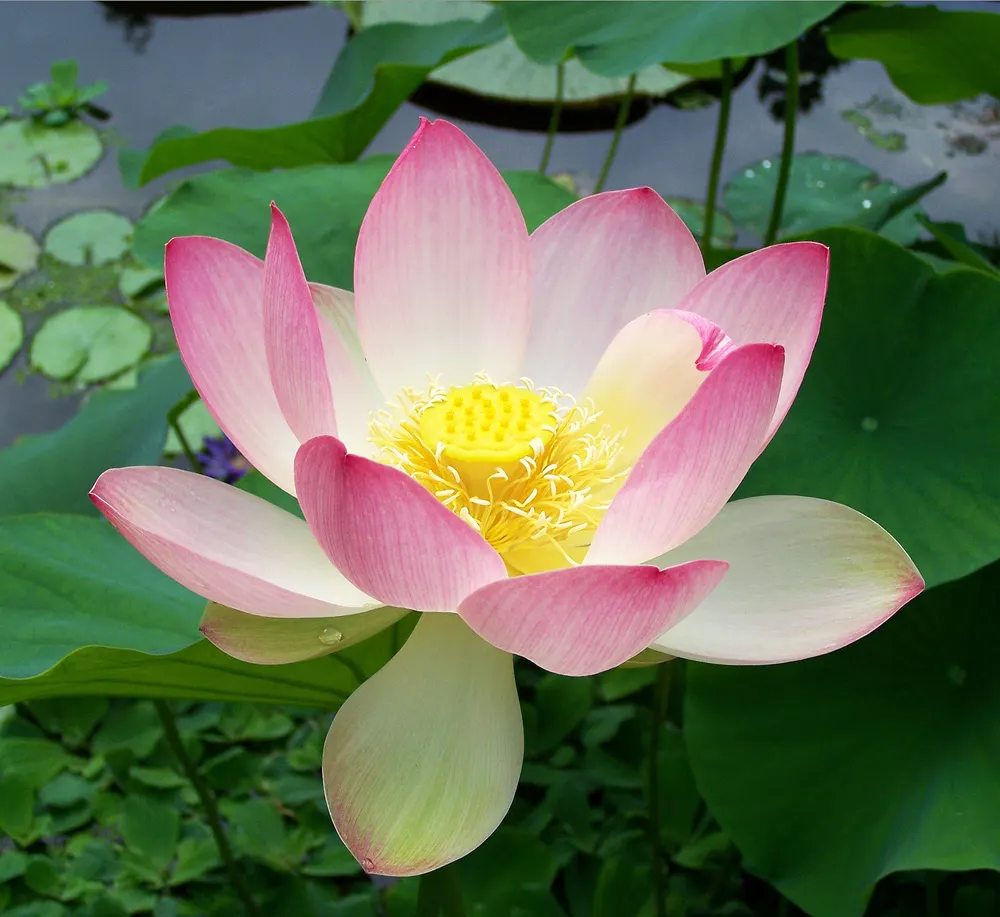
Photo: T.Voekler, CC BY-SA 3.0 (via Wikimedia Commons)
Sacred Lotus
Nelumbo nucifera
Also known as Indian Lotus, Chinese Water Lily, East Indian Lotus, Padma
Key benefits
✦Traditional uses
✦For thousands of years the sacred lotus has been far more than a garden pond centerpiece. In Chinese and Ayurvedic traditions, the seeds were dried and used as a gentle tonic to calm a restless spirit and support a good night's sleep, while the rhizome, sliced into its lacy, hole-riddled rounds, was valued as a cooling food thought to settle the stomach and nourish the blood. The leaves have long been wrapped around rice and other foods for steaming, both for flavor and for their traditional cooling reputation. Every part of the plant, from root to seed pod, found a place in the kitchen and the apothecary alike, and the flower itself became a lasting symbol of purity rising untouched from the mud.
How to grow & use it
✦The full apothecary for Sacred Lotus
Traditional remedies and step-by-step preparations, a complete growing guide, and how to harvest, dry, and store it, all unlocked with HerbLens Unlimited.
- ✦Remedies & preparations
- ✦ Growing guide
- ✦Harvest & storage
From under $6 a month. Free plant identifications always included.
- ✦Lily bulb
- ✦Poria mushroom
- ✦Longan fruit
- ✦Poria for a similar calming, grounding quality
“For the quiet after a long day, when the mind needs to settle like still water.”
Lotus seeds found buried in a dry lakebed in China have sprouted after being carbon dated to roughly 1,300 years old, making them among the oldest viable seeds ever germinated.
Cook lotus rhizome and leaves thoroughly, since raw or undercooked lotus root grown in contaminated water has been linked to parasitic infection. Lotus seeds are well tolerated as food.