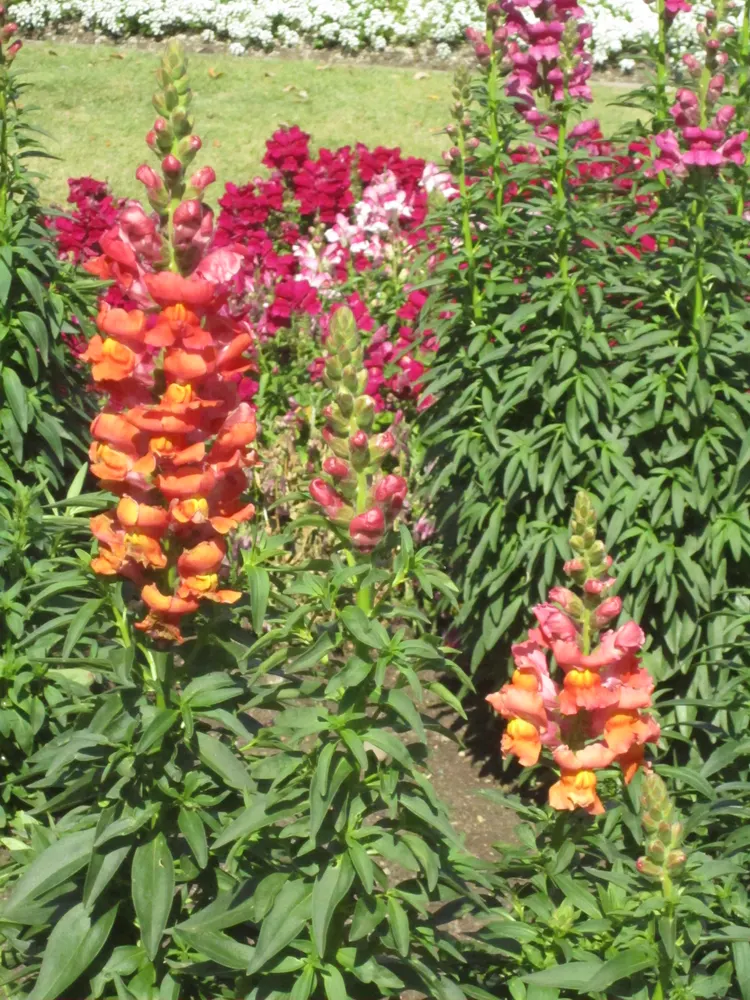
Photo: Craig Franklin, CC BY-SA 3.0 au (via Wikimedia Commons)
Snapdragon
Antirrhinum majus
Also known as Dragon Flower, Lion's Mouth, Calf's Snout
Key benefits
✦Traditional uses
✦Snapdragon has always been more a flower of folklore and the garden bed than of the medicine chest. In medieval Europe, its odd seed pods, which dry into tiny papery skulls, gave rise to a belief that the plant could ward off curses, hexes, and the evil eye, and sprigs were sometimes tucked into pockets or hung over doorways for protection. Country gardeners also prized it simply for its cheerful, snapping blooms, which children have delighted in pinching open like a dragon's mouth for generations. Its flowers have occasionally been used as a decorative, edible garnish on salads and desserts, valued for their color rather than any established herbal effect.
How to grow & use it
✦The full apothecary for Snapdragon
Traditional remedies and step-by-step preparations, a complete growing guide, and how to harvest, dry, and store it, all unlocked with HerbLens Unlimited.
- ✦Remedies & preparations
- ✦ Growing guide
- ✦Harvest & storage
From under $6 a month. Free plant identifications always included.
- ✦Calendula
- ✦Chamomile
- ✦Yarrow
- ✦Calendula petals
- ✦Viola flowers
“For a garden border that snaps to life with color and carries a little old-world folklore along with it.”
Squeeze a snapdragon bloom gently at the sides and its "mouth" pops open like a little dragon's jaw, then snaps shut again when released, which is exactly how the flower earned its name.
Snapdragon flowers are generally non-toxic and are sometimes used as a decorative, edible garnish, though they have no established use as an internal remedy.