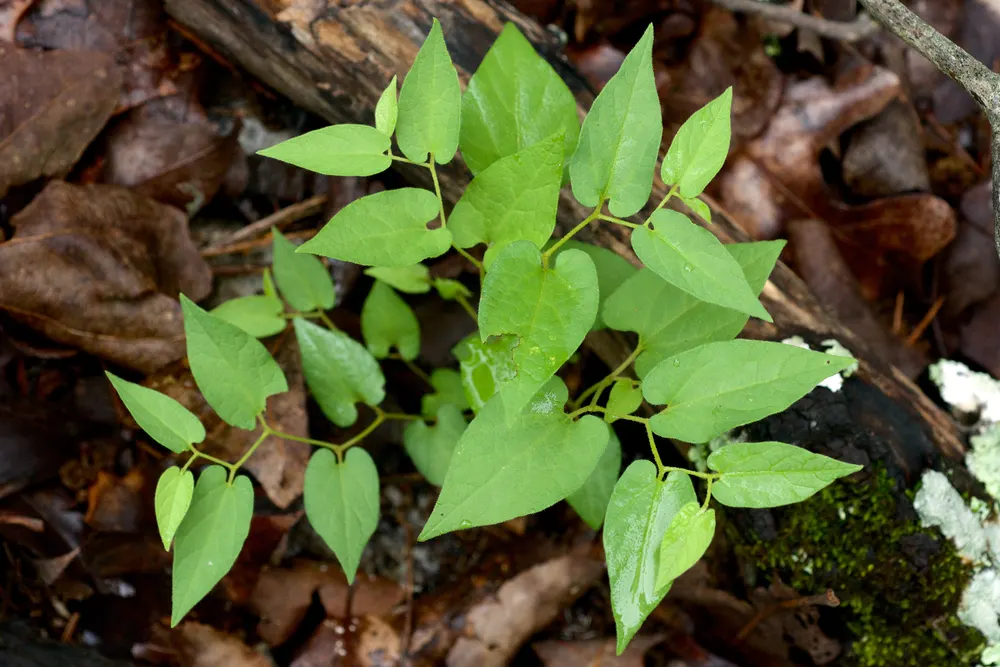
Photo: Eric Hunt, CC BY-SA 4.0 (via Wikimedia Commons)
Virginia Snakeroot
Aristolochia serpentaria
Also known as Virginia Snakeroot, Snakeroot, Serpentary Root, Snakeweed
Traditional uses
✦Virginia snakeroot earned its name and its reputation the same way: European settlers, watching Indigenous healers of the eastern woodlands, came to believe the gnarled, fibrous root could counter the bite of a venomous snake, a belief reinforced by the old doctrine of signatures, since the twisted rhizome itself was thought to resemble a small serpent. For generations it was steeped as a bitter tonic for fevers, colds, and sluggish digestion, and it found its way into nineteenth century apothecary cabinets and official pharmacopoeias as a stimulating bitter. That history matters, but it belongs firmly to the past. Modern research has shown the plant to be genuinely dangerous, and it has been retired from responsible herbal practice.
How to grow & use it
✦The full apothecary for Virginia Snakeroot
Traditional remedies and step-by-step preparations, a complete growing guide, and how to harvest, dry, and store it, all unlocked with HerbLens Unlimited.
- ✦Remedies & preparations
- ✦ Growing guide
- ✦Harvest & storage
From under $6 a month. Free plant identifications always included.
- ✦Seneca snakeroot (Polygala senega), its old apothecary companion in fever and snakebite formulas
- ✦Boneset, another woodland fever herb it was historically dried alongside
- ✦Echinacea, for those seeking a well-studied herb to support the body during illness
- ✦Yarrow, a long trusted and safer traditional fever and wound herb
“A storied root from the old apothecary shelf, remembered today more as a lesson in caution than a cure.”
The very feature that made Virginia snakeroot famous, its root resembling a coiled little serpent, was also a warning herbalists once heeded without knowing why: that same root contains aristolochic acid, a compound now recognized as one of the most potent natural kidney toxins and carcinogens known, and its cousin plants across Europe and Asia have been traced to entire outbreaks of kidney disease in people who drank contaminated herbal teas or flour.
Aristolochia serpentaria contains aristolochic acid, a compound classified by the International Agency for Research on Cancer as a Group 1 human carcinogen and a potent nephrotoxin. Ingesting any part of this plant, in any preparation or amount, has been linked to irreversible kidney failure and urinary tract cancers, sometimes appearing years after exposure, a condition now known as aristolochic acid nephropathy. Because of this, the FDA has warned consumers to avoid all Aristolochia-containing products, and many countries restrict or ban their sale outright. It is not safe during pregnancy, is not safe for anyone regardless of health status, and has no established safe dose. This plant should never be ingested, brewed, or taken internally in any form. If you are drawn to Virginia snakeroot, enjoy it as a native woodland plant in the garden or in botanical history, and please speak with a qualified healthcare provider or medical toxicologist before considering any Aristolochia product, rather than using this or any reference as a guide for use.