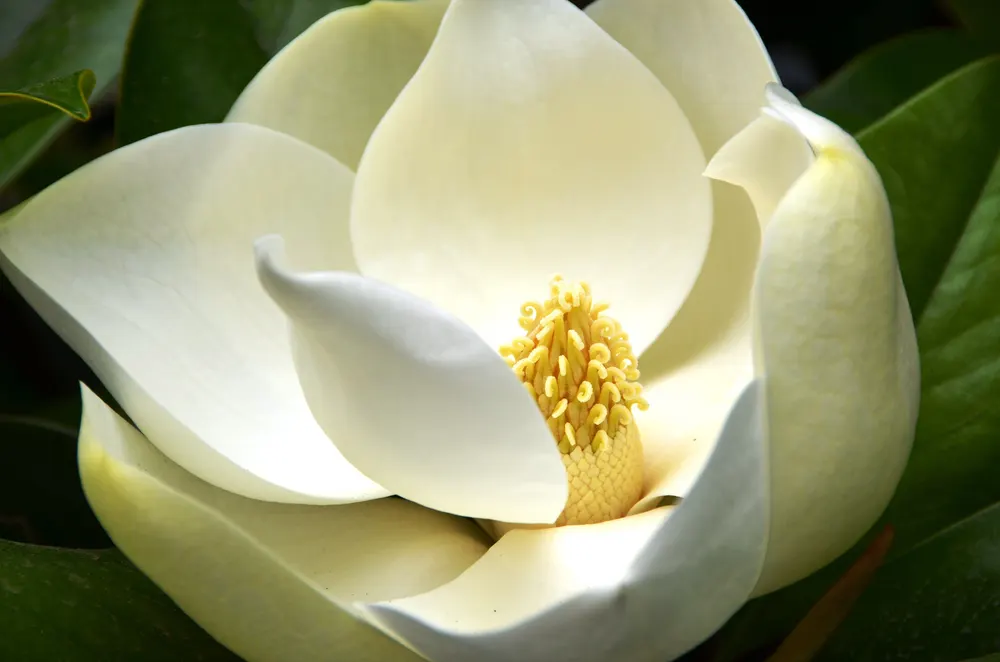
Photo: Josep Renalias Lohen11, CC BY-SA 3.0 (via Wikimedia Commons)
Southern Magnolia
Magnolia grandiflora
Also known as Bull Bay, Large-flower Magnolia, Evergreen Magnolia
Key benefits
✦Traditional uses
✦Long before it became a beloved shade tree of southern gardens, Southern Magnolia bark was steeped by early physicians and folk healers of the American South as a bitter tonic, traditionally used much like quinine bark to ease fevers, chills, and the aches of rheumatism. Confederate soldiers reportedly chewed the bark or brewed it as a substitute for scarce quinine during outbreaks of malaria-like fevers. The fragrant flowers and leaves found gentler use as well, tucked into linens and rooms for their rich, lemony perfume and their association with hospitality and comfort in southern households.
How to grow & use it
✦The full apothecary for Southern Magnolia
Traditional remedies and step-by-step preparations, a complete growing guide, and how to harvest, dry, and store it, all unlocked with HerbLens Unlimited.
- ✦Remedies & preparations
- ✦ Growing guide
- ✦Harvest & storage
From under $6 a month. Free plant identifications always included.
- ✦Sassafras
- ✦Elderflower
- ✦Chamomile
- ✦Magnolia officinalis (traditional Chinese magnolia bark)
- ✦Sassafras bark
“You want the scent of an old southern porch on a summer evening, and a little of the grit that grew alongside it.”
The flowers of Southern Magnolia are so ancient in design that they evolved before bees existed. They are pollinated by beetles, and their thick, tough petals are built to withstand being chewed on without falling apart.
Southern Magnolia is not considered toxic, but the aromatic, bitter inner bark is traditionally used only in small, occasional amounts rather than as a daily tonic.