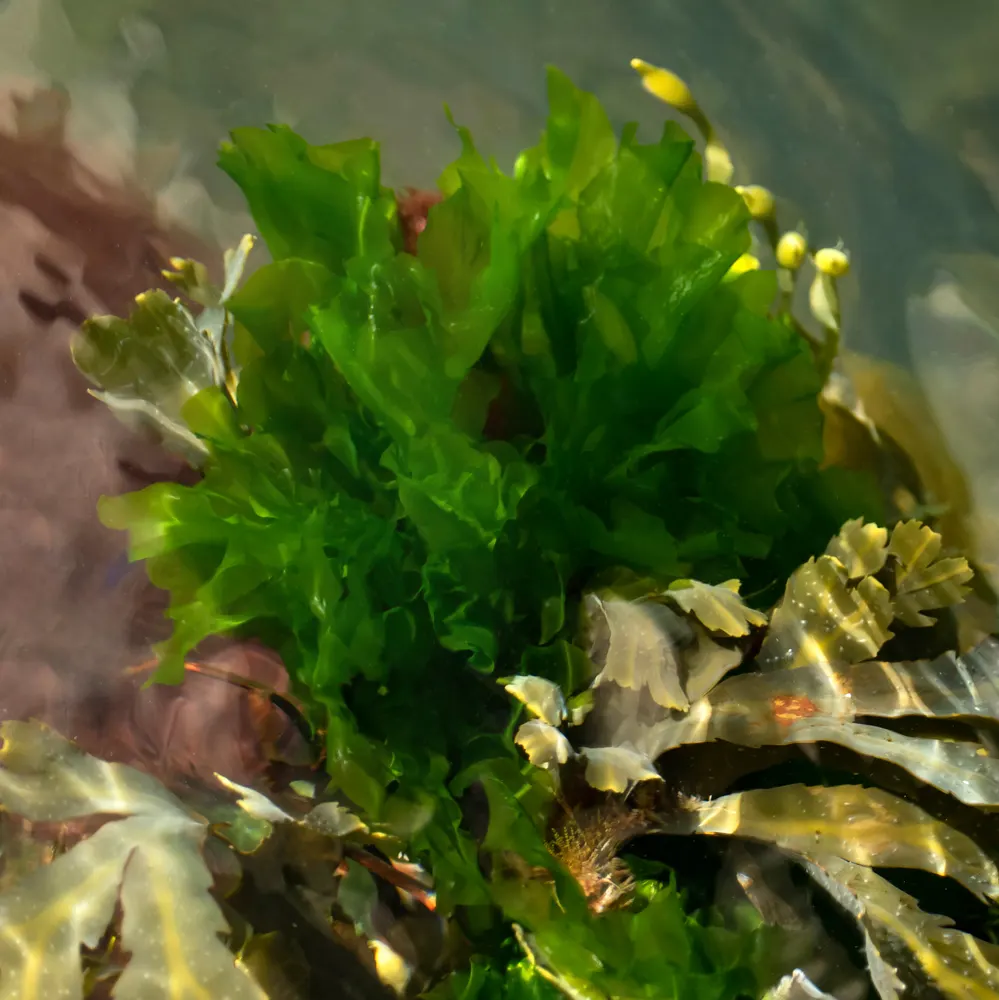
Photo: W.carter, CC0 (via Wikimedia Commons)
Sea Lettuce
Ulva lactuca
Also known as Sea Lettuce, Green Laver, Aosa
Key benefits
✦Traditional uses
✦Long before it had a Latin name, sea lettuce was quietly feeding people who lived along the world's coastlines, from the shores of Wales and Ireland to the tide pools of Japan, Chile, and the Pacific Islands. Coastal families gathered its bright green fronds at low tide and folded them into soups, stews, and simple salads, prizing the seaweed for the deep, briny minerality it brought to a pot when little else was in season. In Japan it has long been dried and crumbled into broths and rice dishes under the name aosa, valued as much for flavor as for the mineral richness it was believed to lend the body. Because it grows so abundantly and asks so little in return, sea lettuce became one of the most reliably foraged foods of the intertidal world, a small green gift left behind by the retreating tide.
How to grow & use it
✦The full apothecary for Sea Lettuce
Traditional remedies and step-by-step preparations, a complete growing guide, and how to harvest, dry, and store it, all unlocked with HerbLens Unlimited.
- ✦Remedies & preparations
- ✦ Growing guide
- ✦Harvest & storage
From under $6 a month. Free plant identifications always included.
- ✦Kelp
- ✦Dulse
- ✦Ginger
- ✦Nori
- ✦Dulse
“For a taste of the tide, bright, briny, and green as the shallows at low water.”
Sea lettuce gets its common name from its ruffled, near-translucent green fronds, which genuinely resemble a torn leaf of garden lettuce floating in the tide pool.
Sea lettuce is naturally high in iodine, so people with thyroid conditions should be cautious about eating it regularly. Like other seaweeds it can absorb heavy metals from polluted water, so only harvest it from clean coastal areas or buy from a tested source.