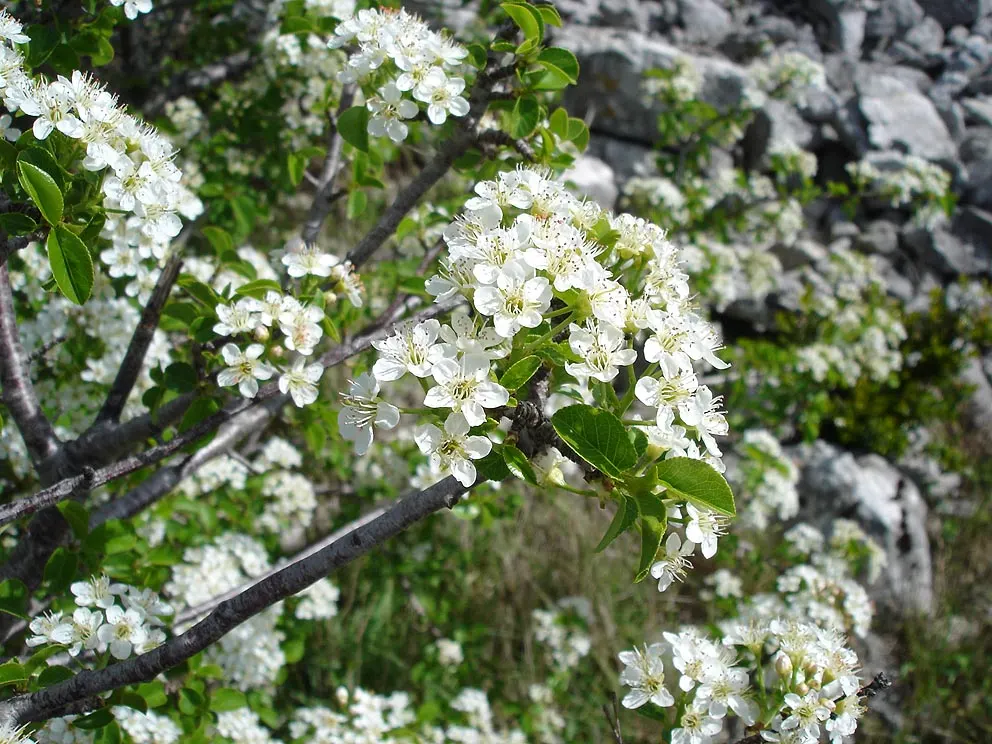
Photo: CC BY-SA 3.0 (via Wikimedia Commons)
Mahaleb Cherry
Prunus mahaleb
Also known as Mahlab, Mahleb, St. Lucie Cherry, Perfumed Cherry, Rock Cherry
Key benefits
✦Traditional uses
✦For centuries, home bakers across the Levant, Greece, Turkey, Armenia, and Cyprus have cracked open the small black cherries of this tree not for their thin, bitter flesh, but for the pit inside. Ground fine, that kernel becomes mahlab, a spice with a haunting scent somewhere between cherry, almond, and orange blossom, worked into Easter breads like tsoureki and choreg and into shortbread cookies like ma'amoul and kahk. In France, the tree earned a second life entirely apart from the kitchen. Its fine, richly scented wood, known there as bois de Sainte-Lucie, was carved by artisans in the Vosges mountains into walking sticks, pipe bowls, and small treasure boxes prized for holding their fragrance for years. The tree has also long served orchardists as a tough, lime-tolerant rootstock, grafted with sweet and sour cherry varieties to help them thrive in poor, dry soils where they otherwise would not.
How to grow & use it
✦The full apothecary for Mahaleb Cherry
Traditional remedies and step-by-step preparations, a complete growing guide, and how to harvest, dry, and store it, all unlocked with HerbLens Unlimited.
- ✦Remedies & preparations
- ✦ Growing guide
- ✦Harvest & storage
From under $6 a month. Free plant identifications always included.
- ✦Cardamom
- ✦Cinnamon
- ✦Orange blossom water
- ✦A small amount of bitter almond extract
- ✦A blend of ground cardamom and cinnamon
“For the bread that tastes like a holiday morning, reach for a pinch of mahlab.”
The tree's fragrant wood was so treasured by French pipe-makers and woodcarvers in the Vosges region that it earned its own name, bois de Sainte-Lucie, and workshops built entire small trades around turning it into scented canes, snuff boxes, and pipe stems that held their perfume for years.
The raw kernels contain amygdalin, which can release cyanide if chewed or eaten in quantity, so never crack open and eat the pits. The mahlab spice sold for baking is prepared safely in small amounts; buy it from a reputable spice supplier rather than preparing it yourself from wild trees.