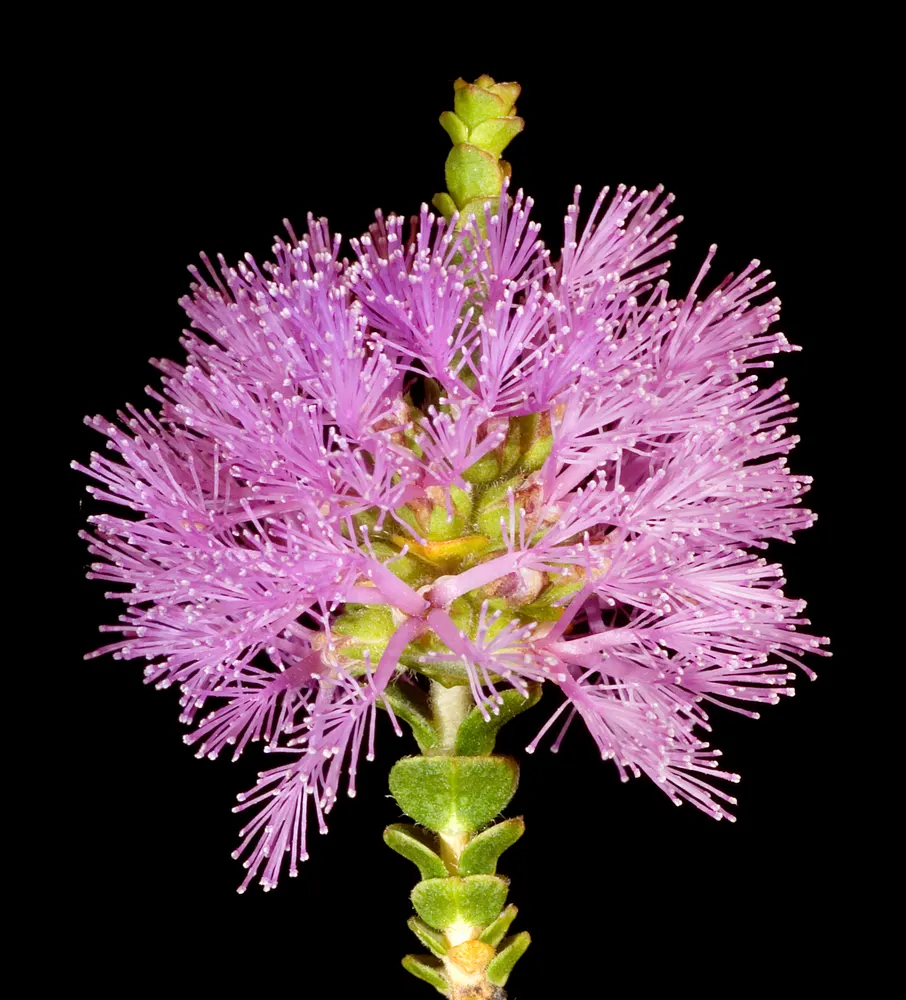
Photo: Kevin Thiele from Perth, Australia, CC BY 2.0 (via Wikimedia Commons)
Common Regelia
Regelia ciliata
Also known as Common Regelia, Cilia Regelia
Key benefits
✦Traditional uses
✦Regelia ciliata does not carry a documented history as a medicinal or culinary herb. It belongs to a small, little-known genus of Western Australian shrubs that botanists have long recognized as close cousins of Melaleuca, sharing the same brush-like flower clusters and fine, needle-soft foliage fringed with tiny hairs, which is where the species name ciliata, meaning fringed with eyelashes, comes from. Its real legacy has been as a garden and habitat plant, valued by native plant growers in Western Australia for the way its pink to purple blooms light up sandy heathland and draw in honeyeaters. In the wild it has quietly played its part in supporting the insects and birds of the fragile southwest Australian heath ecosystem, one of the most botanically rich and threatened regions on earth.
How to grow & use it
✦The full apothecary for Common Regelia
Traditional remedies and step-by-step preparations, a complete growing guide, and how to harvest, dry, and store it, all unlocked with HerbLens Unlimited.
- ✦Remedies & preparations
- ✦ Growing guide
- ✦Harvest & storage
From under $6 a month. Free plant identifications always included.
- ✦Melaleuca
- ✦Grevillea
- ✦Banksia
- ✦Melaleuca thymifolia
- ✦Regelia velutina
“For a patch of dry, sandy ground that needs a wash of unexpected color and a reason for the honeyeaters to visit.”
The genus Regelia was named in honor of Eduard von Regel, a 19th century German-Russian botanist who directed the Imperial Botanical Garden in St. Petersburg, even though he never set foot in the remote Western Australian heathlands where these shrubs actually grow.
Regelia ciliata has no documented history of food or medicinal use, so it should not be eaten or used as a home remedy.