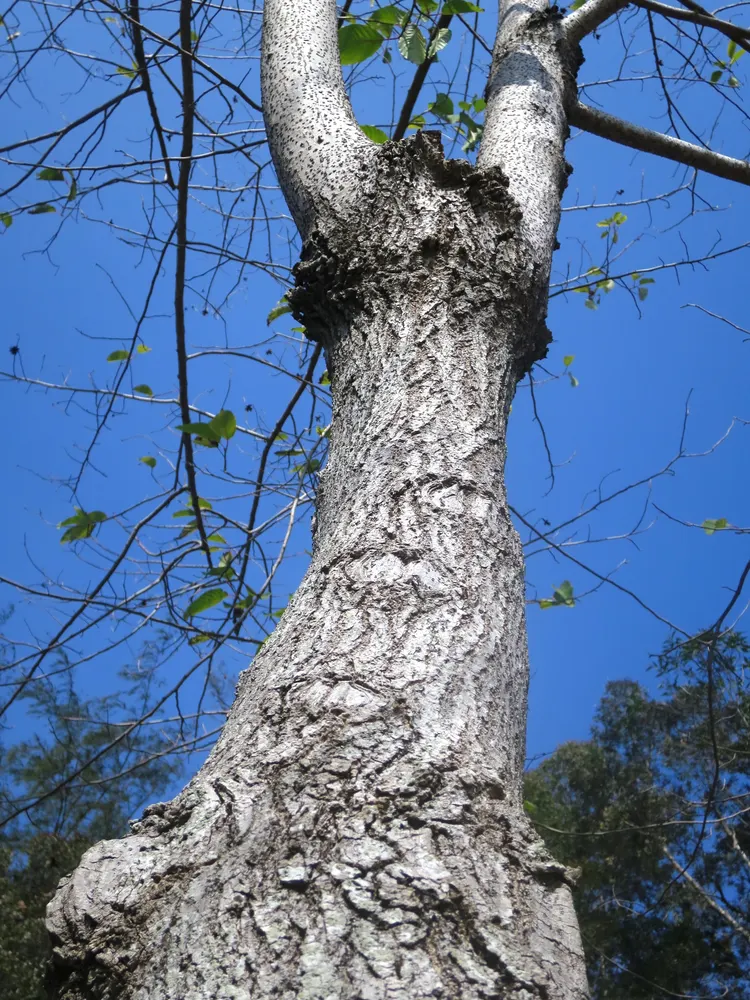
Photo: Geographer, CC BY-SA 3.0 (via Wikimedia Commons)
Happy Tree
Camptotheca acuminata
Also known as Cancer Tree, Xi Shu (Tree of Joy), Tree of Life, Camptotheca
Traditional uses
✦Camptotheca acuminata has grown for centuries along the riverbanks and misty valleys of southern China, where villagers called it Xi Shu, the tree of joy, for the graceful, almost cheerful way its branches sway and its winged seed clusters dangle like little lanterns. It was never a kitchen or teapot herb in the way mint or chrysanthemum were. Instead it entered the historical record more recently, in the 1960s, when American and Chinese researchers isolated a powerful compound called camptothecin from its bark and wood, a discovery that eventually led to major chemotherapy drugs still used in hospitals today. So its true legacy is medical and scientific rather than folk or kitchen tradition, a tree whose greatest gift required a laboratory, not a teapot.
How to grow & use it
✦The full apothecary for Happy Tree
Traditional remedies and step-by-step preparations, a complete growing guide, and how to harvest, dry, and store it, all unlocked with HerbLens Unlimited.
- ✦Remedies & preparations
- ✦ Growing guide
- ✦Harvest & storage
From under $6 a month. Free plant identifications always included.
- ✦Ginkgo biloba (shared East Asian landscape and shade tree tradition)
- ✦Osmanthus fragrans (companion planting in southern Chinese gardens)
“A stately shade tree with a history rooted in laboratories, not teacups.”
The very compound that makes Camptotheca acuminata dangerous to ingest, camptothecin, is also the parent molecule behind irinotecan and topotecan, two chemotherapy drugs still used in hospitals worldwide, making this graceful tree, discovered growing along a Chinese riverbank, one of the most quietly influential plants in modern oncology.
Camptotheca acuminata is genuinely toxic and must never be ingested, brewed as tea, chewed, or otherwise self-administered. Its bark, wood, and roots contain camptothecin, a potent cytotoxic alkaloid that damages DNA replication in cells. This exact property makes it valuable as the source material for regulated chemotherapy drugs like irinotecan and topotecan, but it also means raw plant material is unpredictable and dangerous outside a pharmaceutical laboratory, capable of causing severe gastrointestinal, blood, and organ toxicity. There is no safe traditional home remedy, dose, or preparation for this plant, and it should never be used during pregnancy, nursing, or by anyone for any home health purpose. This entry is included for its historical and botanical significance only. If you are seeking cancer treatment or support, please work directly with a licensed oncologist or qualified healthcare professional rather than the raw plant.