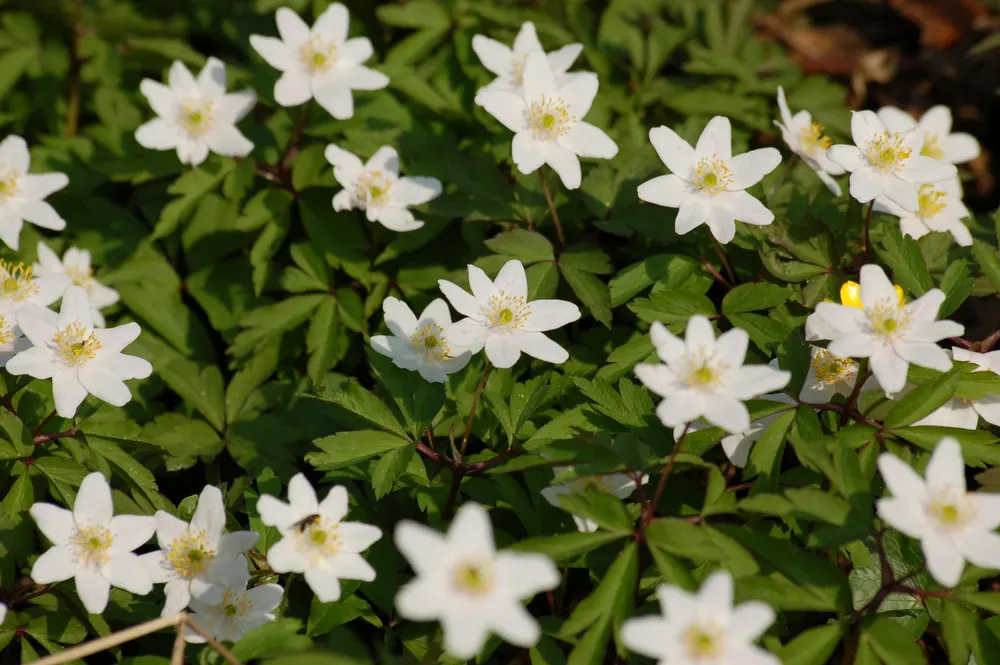
Photo: Lilly M, CC BY-SA 3.0 (via Wikimedia Commons)
Wood Anemone
Anemone nemorosa
Also known as Windflower, Smell Fox, European Wood Anemone
Key benefits
✦Traditional uses
✦Long before it was understood chemically, the wood anemone was read by country folk as one of the surest signs that winter had truly loosened its grip, its pale stars opening across the bare woodland floor while the trees overhead were still leafless. In much of rural Europe it earned the nickname windflower, from an old belief that its delicate petals only unfurled when the spring breeze coaxed them open, and it was treated more as an omen and a beauty than as a household remedy. Some old herbals do record it being dabbed onto the skin in tiny amounts as a folk counter-irritant for aches, meant to raise a mild blister the way mustard plasters were used, but this practice was risky even by the standards of its day and has been set aside by modern herbalism in favor of gentler, safer plants. Today the wood anemone's real legacy is ecological rather than medicinal, prized by naturalists as a quiet, patient indicator that a woodland has stood undisturbed for centuries.
How to grow & use it
✦The full apothecary for Wood Anemone
Traditional remedies and step-by-step preparations, a complete growing guide, and how to harvest, dry, and store it, all unlocked with HerbLens Unlimited.
- ✦Remedies & preparations
- ✦ Growing guide
- ✦Harvest & storage
From under $6 a month. Free plant identifications always included.
- ✦Bluebell
- ✦Wild garlic (ramsons)
- ✦Primrose
- ✦Anemone blanda, for a similar early-spring woodland carpet
- ✦Hepatica nobilis, a related and similarly shaped shade-loving spring bloomer
“For the hush of a spring wood before the leaves come in, when the ground turns to a quiet drift of white.”
A single wood anemone colony can take centuries to spread just a few dozen feet, since it relies mostly on slow-creeping rhizomes rather than seed, which is exactly why ecologists use dense drifts of it as a living clue that a wood has never been plowed or cleared.
Every part of the wood anemone contains protoanemonin, a toxic, acrid compound released when the plant's tissue is bruised or crushed. Fresh sap can cause redness, burning, and blistering on skin contact, and chewing or swallowing any part of the plant can severely irritate the mouth, throat, and digestive tract, leading to nausea, vomiting, and cramping. It is also considered toxic to livestock and pets who graze on it. This is a plant to admire on the woodland floor rather than to gather for the kitchen or the medicine cabinet, and it should never be ingested. If exposure or ingestion is suspected, contact a poison control center or a qualified healthcare professional right away, and always talk to a doctor or medical herbalist before using any wild plant medicinally.