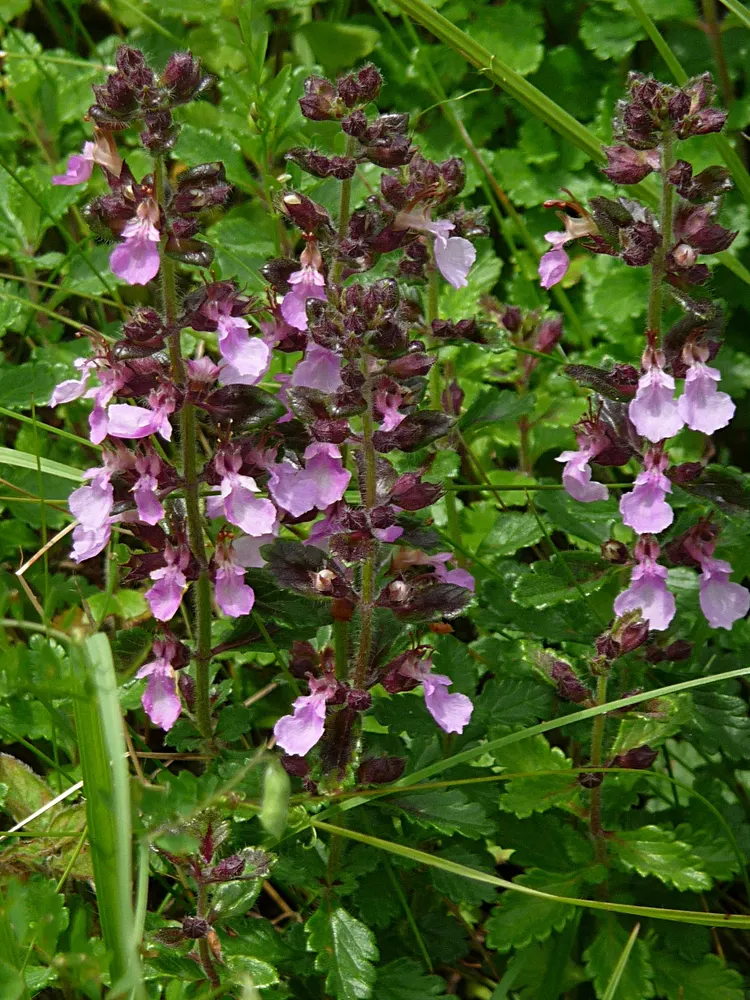
Photo: Konrad Lackerbeck, CC0 (via Wikimedia Commons)
Wall Germander
Teucrium chamaedrys
Also known as Germander, Chamaedrys, Poor Man's Boxwood, Petty Germander
Key benefits
✦Traditional uses
✦Wall Germander earned its common name by seeding itself happily into the cracks of old stone walls across the Mediterranean, where it has been noticed and gathered since antiquity. Ancient physicians, including Dioscorides, wrote of chamaedrys as a bitter tonic for fevers and gout, and it later became a fixture of monastery gardens and household remedy cabinets across medieval and Renaissance Europe. For centuries it was also prized simply as a plant, clipped into the neat low hedges that outlined knot gardens when boxwood was scarce or too slow growing. That long medicinal reputation has since given way to caution, after modern medicine linked germander preparations to serious liver injury, but its story as one of Europe's oldest garden and remedy plants remains part of herbal history.
How to grow & use it
✦The full apothecary for Wall Germander
Traditional remedies and step-by-step preparations, a complete growing guide, and how to harvest, dry, and store it, all unlocked with HerbLens Unlimited.
- ✦Remedies & preparations
- ✦ Growing guide
- ✦Harvest & storage
From under $6 a month. Free plant identifications always included.
- ✦Lavender
- ✦Santolina
- ✦Hyssop
- ✦Dwarf boxwood
- ✦Germander sage (for ornamental hedging only)
“For the low, silvery green hedge that has framed herb gardens since before the Renaissance.”
For hundreds of years, Wall Germander was Europe's favorite stand-in for boxwood, clipped into the crisp low borders that outlined Elizabethan and French knot gardens long before anyone understood what its leaves could do to the liver.
Wall Germander carries a real and well documented danger: its leaves contain hepatotoxic diterpenoids that can injure the liver. In the early 1990s, French health authorities traced a cluster of acute hepatitis cases, some severe enough to require hospitalization, directly to germander teas and weight loss capsules, and pulled those products from shelves. Because of this, the plant should not be brewed, swallowed, or taken as a supplement in any form, and it is not appropriate during pregnancy or breastfeeding, for anyone with liver disease, or alongside medications that stress the liver. Its place today is in the garden bed and the flower press, not the teacup. If you are curious about herbal support for any condition Wall Germander was once used for, please speak with a qualified healthcare provider or clinical herbalist who can guide you toward something genuinely safe.