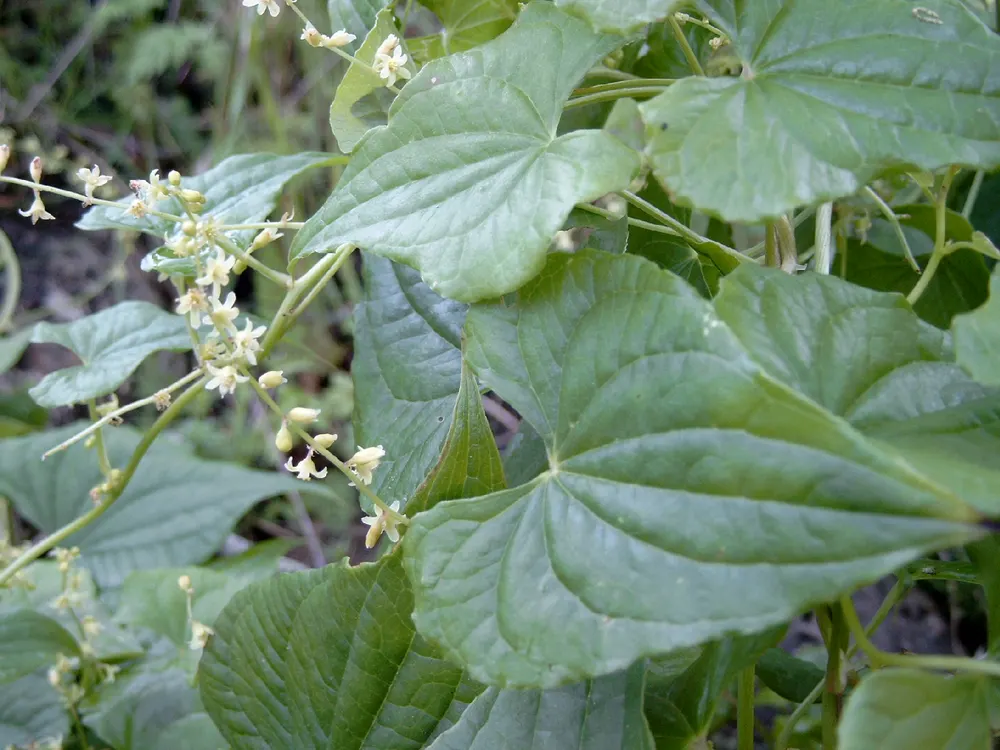
Photo: CC BY-SA 3.0 (via Wikimedia Commons)
Black Bryony
Tamus communis
Also known as Lady's Seal, Black Bindweed, Poison Berry, Bryony
Key benefits
✦Traditional uses
✦Black bryony has a long memory in the European countryside, where cottage healers once grated its fresh tuber into a paste and bound it over bruises, sprains, and chilblains, trusting the fiery sap to draw blood back to the skin's surface. Village names like 'poor man's remedy' hint at how widely ordinary households once turned to this hedgerow vine when a physician was out of reach. It was never a kitchen herb and never meant to be eaten. Its reputation belongs entirely to the liniment cupboard, not the teapot, and even that external use has largely fallen away as its irritant nature became better understood.
How to grow & use it
✦The full apothecary for Black Bryony
Traditional remedies and step-by-step preparations, a complete growing guide, and how to harvest, dry, and store it, all unlocked with HerbLens Unlimited.
- ✦Remedies & preparations
- ✦ Growing guide
- ✦Harvest & storage
From under $6 a month. Free plant identifications always included.
- ✦Arnica (external bruise care)
- ✦Comfrey (external bruise and sprain care)
“A hedgerow vine to admire from a respectful distance, its glossy scarlet berries a warning as much as an ornament.”
Black bryony is the only wild member of the yam family, Dioscoreaceae, native to Britain and northern Europe, a family otherwise made up almost entirely of tropical and subtropical vines.
Every part of Tamus communis is toxic, and the tuberous root and bright red autumn berries are the most dangerous, capable of causing intense burning of the mouth and throat, vomiting, and diarrhea if eaten, with children especially at risk from the attractive berries. The fresh sap and cut root contain calcium oxalate crystals and other irritant compounds that can cause painful blistering and dermatitis on contact with skin, so even the old external folk poultices carry real risk of injury. This plant should not be ingested or applied at home in any form, and anyone who suspects exposure or poisoning should seek medical attention promptly rather than attempt self-treatment; always consult a qualified healthcare professional before considering any herb with a toxic history.