Photo: Casliber, CC BY-SA 3.0 (via Wikimedia Commons)
Woody Pear
Xylomelum occidentale
Also known as Native Pear, Wild Pear, Wooden Pear
Key benefits
✦Traditional uses
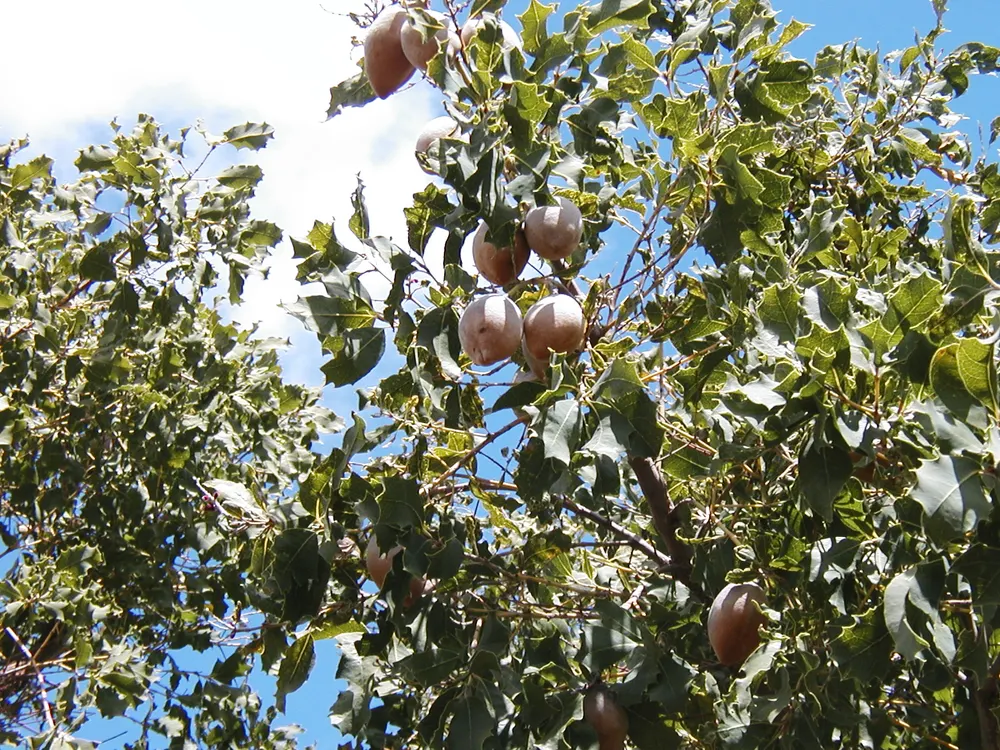
✦Woody Pear has never been a kitchen or medicine cabinet herb, its story is a horticultural and craft one. Growers and florists across the sandplains of southwestern Australia have long prized it for the strange, fuzzy, pear-shaped pods that swell along its stems, cutting them for dried arrangements and wreaths where the pods hold their form for years without fading or crumbling. In the wild it is a familiar, quietly loved fixture of the kwongan heath, feeding native bees and insects during its bloom and shading the sandy ground it grows in. Its value has always been in its shape and toughness rather than in any cup of tea.
How to grow & use it
✦The full apothecary for Woody Pear
Traditional remedies and step-by-step preparations, a complete growing guide, and how to harvest, dry, and store it, all unlocked with HerbLens Unlimited.
- ✦Remedies & preparations
- ✦ Growing guide
- ✦Harvest & storage
From under $6 a month. Free plant identifications always included.
- ✦Banksia
- ✦Kangaroo paw (Anigozanthos)
- ✦Grevillea
- ✦Hakea pods
- ✦Banksia pods
“When you want a piece of wild Western Australian bushland, sculptural and everlasting, standing quietly in a vase.”
The Woody Pear's fruit takes about two years to fully mature into its rock-hard, velvety shell, and like many of its Proteaceae cousins it can stay sealed on the plant for a long time, only splitting open to release its papery winged seeds after the heat of a bushfire passes through.
Not eaten; its woody seed pods are used for craft and floral work and should be kept away from children and pets who might chew them.