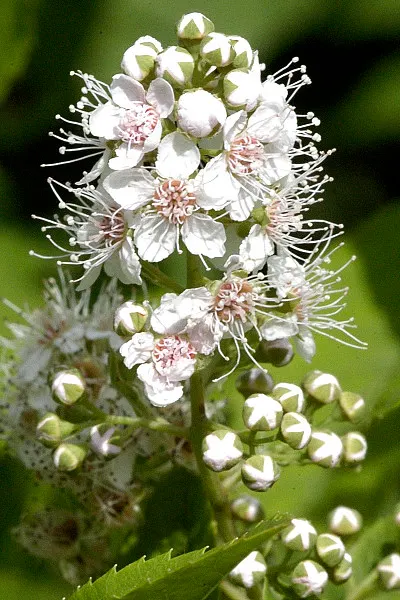
Photo: James K. Lindsey, CC BY-SA 3.0 (via Wikimedia Commons)
White Meadowsweet
Spiraea alba
Also known as Narrowleaf meadowsweet, Pale bridewort, White spirea, Quaker lady
Key benefits
✦Traditional uses
✦Long before it carried the tidy name white meadowsweet, this modest wetland shrub was gathered by the Iroquois, Chippewa, and other Native American communities along the marshes and stream edges of the Northeast, who simmered its leaves and roots into teas for fevers, heart complaints, and stomach troubles. Its frothy white flower plumes made it a familiar sight at the edges of wet meadows every summer, easy to spot and easy to reach, which likely made it one of the more commonly used shrubs in everyday household remedies. It belongs to the same rose family as its more famous European cousin, true meadowsweet, and carries something of that plant's soft, hay-like sweetness and gentle traditional reputation as a calming, settling herb.
How to grow & use it
✦The full apothecary for White Meadowsweet
Traditional remedies and step-by-step preparations, a complete growing guide, and how to harvest, dry, and store it, all unlocked with HerbLens Unlimited.
- ✦Remedies & preparations
- ✦ Growing guide
- ✦Harvest & storage
From under $6 a month. Free plant identifications always included.
- ✦Chamomile
- ✦Peppermint
- ✦Yarrow
- ✦True meadowsweet (Filipendula ulmaria)
- ✦Willow bark
“For a gentle, old-fashioned herb to calm an unsettled stomach or wind down a long day spent outdoors.”
The word aspirin has roots in this very genus: Bayer chemists coined the name from Spirsaure, or spiric acid, a salicylate compound first isolated from a shirt-tail cousin of white meadowsweet once classified as Spiraea ulmaria, now known as Filipendula ulmaria.
White meadowsweet contains salicylate compounds related to aspirin, so it should be avoided by anyone allergic to aspirin and should not be given to children or teens recovering from a viral illness like flu or chickenpox, due to the risk of Reye's syndrome. It should also be used cautiously with blood-thinning medication and avoided during pregnancy and breastfeeding.