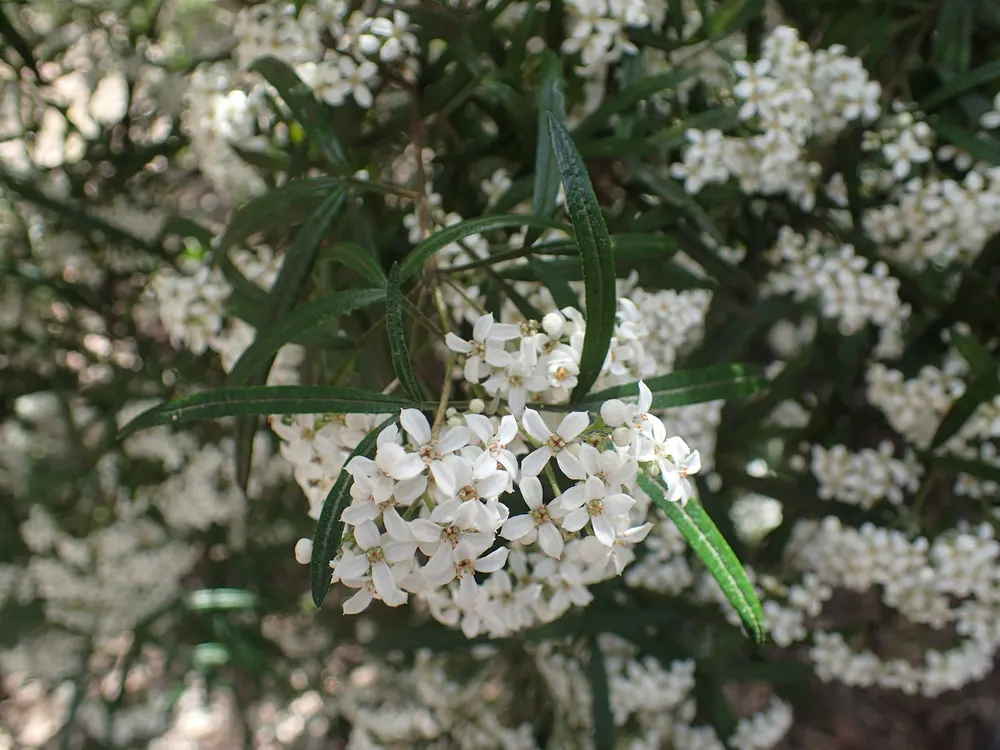
Photo: Geoff Derrin, CC BY-SA 4.0 (via Wikimedia Commons)
Tree Zieria
Zieria arborescens
Also known as Stinkwood, Zieria
Key benefits
✦Traditional uses
✦Tree Zieria has no documented history of internal or medicinal use, either among Aboriginal communities or in colonial-era herbals, and it is best appreciated today as it always has been: as a hardy, aromatic native of Australia's eastern forests. Early botanists and bushwalkers came to know it by nose before they knew it by name, since brushing past its foliage releases a strong, resinous scent that gave rise to the common name 'stinkwood.' In modern bush regeneration and native gardening, it has earned a quiet reputation as a reliable, fast-establishing shrub for shady, damp corners where little else will thrive.
How to grow & use it
✦The full apothecary for Tree Zieria
Traditional remedies and step-by-step preparations, a complete growing guide, and how to harvest, dry, and store it, all unlocked with HerbLens Unlimited.
- ✦Remedies & preparations
- ✦ Growing guide
- ✦Harvest & storage
From under $6 a month. Free plant identifications always included.
“For the damp, shaded corner of the garden that wants a hardy native leafy backdrop, not a cure.”
The genus Zieria was named in 1798 by the botanist James Edward Smith in honor of Johann Baptist Zier, an Austrian gardener, even though Zier almost certainly never laid eyes on the Australian shrub that would go on to carry his name.
Tree Zieria has no established history as a food or medicine and should not be ingested. Its crushed foliage contains strong volatile oils that can irritate skin or airways in sensitive people.