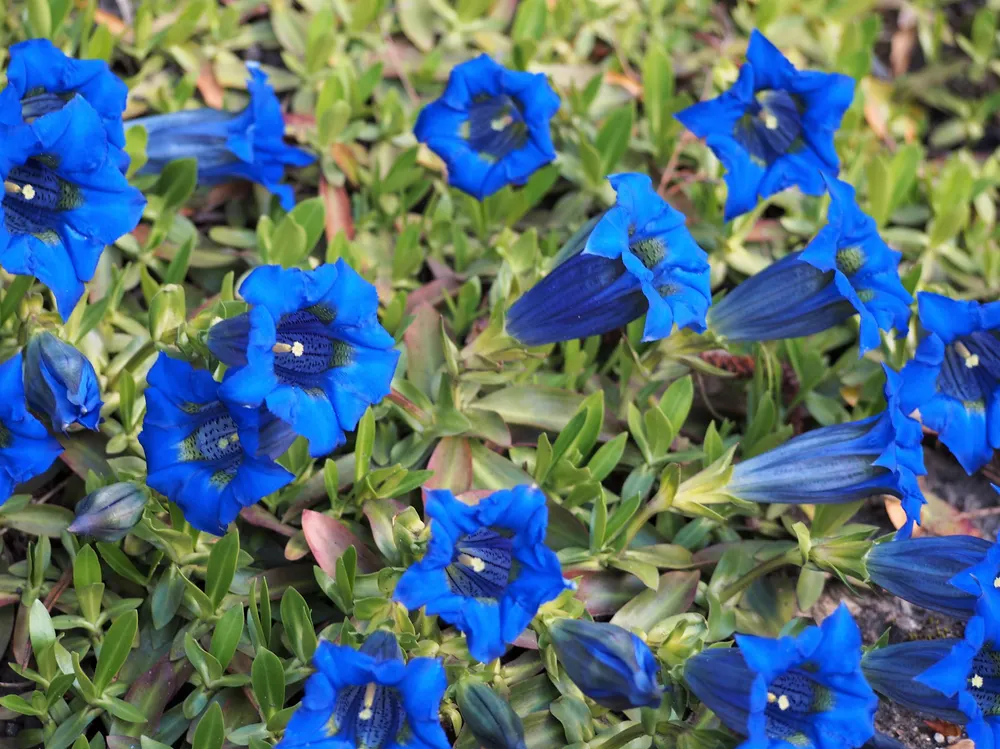
Photo: Agnieszka Kwiecień, Nova, CC BY-SA 4.0 (via Wikimedia Commons)
Stemless Gentian
Gentiana acaulis
Also known as Trumpet Gentian, King of the Alps, Alpine Gentian
Key benefits
✦Traditional uses
✦Long before it was a rock garden treasure, gentian root of many kinds was chewed or steeped by mountain herbalists for its ferociously bitter taste, a quality believed to wake up a sluggish appetite and ease heavy meals. Stemless gentian shares the same bitter glycosides as its taller cousin, the great yellow gentian, which became the herb of choice for bitters and digestive tonics across Europe. Because this particular species grows so slowly and forms such a small root, it was used far more sparingly, valued in local Alpine folk practice even as the bulk of commercial gentian bitters came from its bigger relative. Today it is treasured almost entirely for its extraordinary, almost impossible blue flowers rather than for its roots.
How to grow & use it
✦The full apothecary for Stemless Gentian
Traditional remedies and step-by-step preparations, a complete growing guide, and how to harvest, dry, and store it, all unlocked with HerbLens Unlimited.
- ✦Remedies & preparations
- ✦ Growing guide
- ✦Harvest & storage
From under $6 a month. Free plant identifications always included.
- ✦Ginger
- ✦Orange peel
- ✦Dandelion root
- ✦Gentiana lutea (great yellow gentian)
- ✦Angelica root
“When you want the color blue itself, growing low and bright against the stone.”
The species name acaulis means "stemless" in Latin, describing how each enormous blue trumpet seems to burst straight from the ground with almost no visible stalk. Alpine gardeners have chased this near-impossible shade of blue for centuries, and it is still nicknamed the King of the Alps.
Wild stemless gentian is protected across much of its Alpine range, so only use cultivated stock. Its bitter root can cause nausea or stomach upset in excess and is best avoided with peptic ulcers, acid reflux, or GERD.