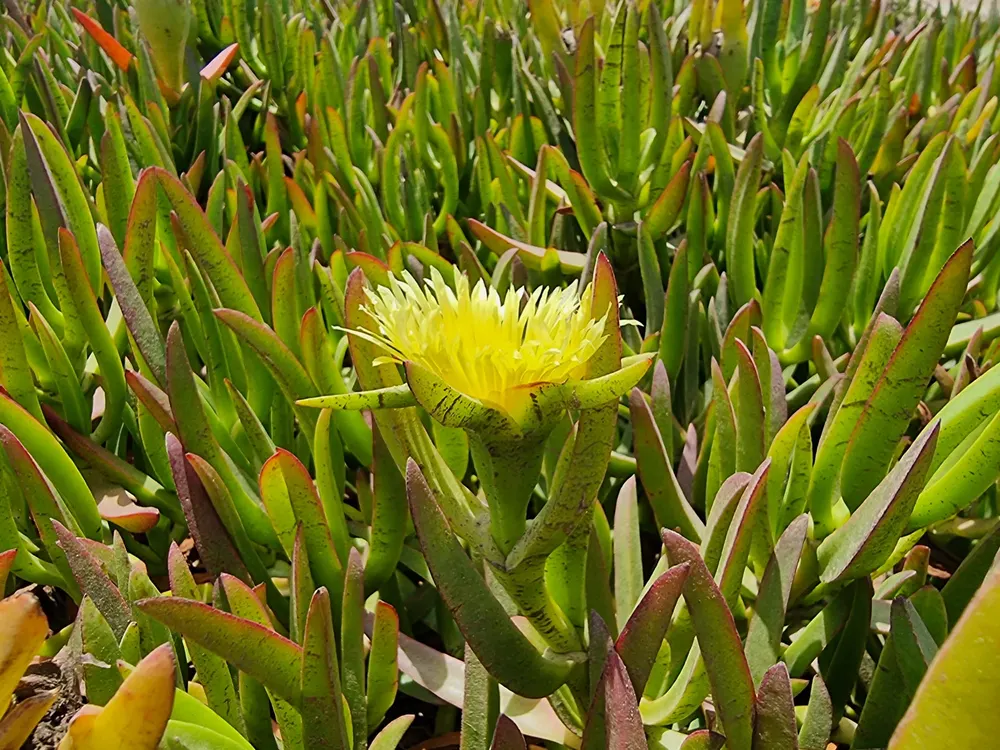
Photo: Andreiflorea993, CC BY-SA 4.0 (via Wikimedia Commons)
Hottentot Fig
Carpobrotus edulis
Also known as Sour Fig, Ice Plant, Highway Ice Plant, Pigface, Suurvy
Key benefits
✦Traditional uses
✦Long before it carpeted coastlines around the world, Carpobrotus edulis grew wild along the dunes of South Africa's Cape, where the Khoikhoi and San peoples relied on its thick, water-filled leaves as a portable first-aid kit. The cooling juice was squeezed straight from a split leaf onto sunburn, insect stings, and small burns, and swallowed or gargled to soothe a raw throat and an unsettled stomach. Later Cape Dutch settlers adopted the same practices and gave the plant its Afrikaans name, and the sweet, tangy fruit became a beloved foraged treat, still cooked into a traditional preserve called sour fig jam.
How to grow & use it
✦The full apothecary for Hottentot Fig
Traditional remedies and step-by-step preparations, a complete growing guide, and how to harvest, dry, and store it, all unlocked with HerbLens Unlimited.
- ✦Remedies & preparations
- ✦ Growing guide
- ✦Harvest & storage
From under $6 a month. Free plant identifications always included.
- ✦Aloe vera
- ✦Calendula
- ✦Plantain
- ✦Aloe vera
- ✦Purslane
“For the sunburned hour at the edge of the sea, when the dune plant underfoot has always been the remedy at hand.”
The ripe fruit's Afrikaans name, suurvy, simply means "sour fig," and it is still simmered into a treasured Cape preserve, even though ecologists elsewhere now count this same hardy plant among the world's most troublesome coastal invaders.
The leaves contain oxalates, so those prone to kidney stones should eat them only in small traditional amounts. This plant is also invasive in many regions and should never be planted or spread in the wild.