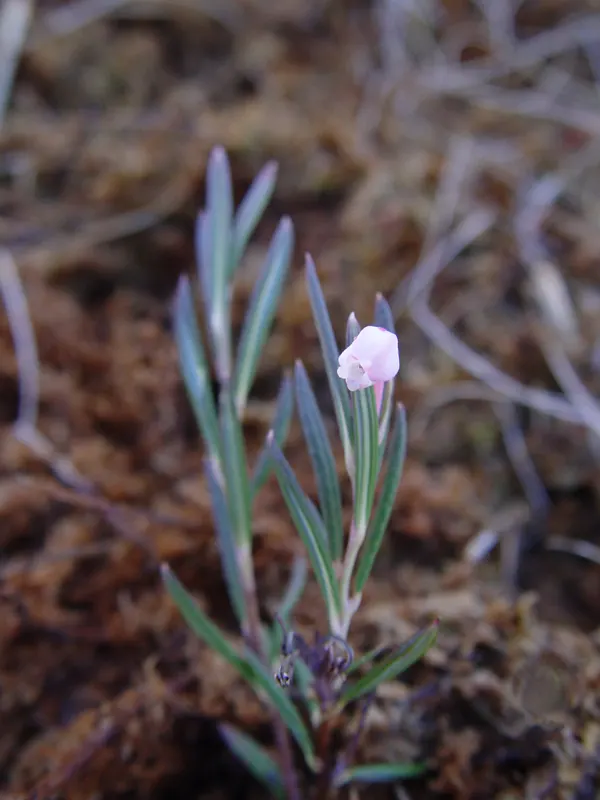
Photo: Mnolf, CC BY-SA 3.0 (via Wikimedia Commons)
Bog Rosemary
Andromeda polifolia
Also known as Bog Rosemary, Marsh Andromeda, Wild Rosemary, Moorwort
Traditional uses
✦Bog rosemary earned its common name from its narrow, rosemary-like leaves, which curl gray and leathery along wiry red stems in the cold, waterlogged bogs it calls home. Unlike its herbal namesake, it was never a kitchen or medicine cabinet plant. Northern peoples who shared the peatlands with it generally knew it by reputation rather than by recipe, a beautiful thing to admire underfoot and to keep livestock away from, not to gather. Its chief legacy in folk knowledge is a warning passed down alongside its dainty spring flowers.
How to grow & use it
✦The full apothecary for Bog Rosemary
Traditional remedies and step-by-step preparations, a complete growing guide, and how to harvest, dry, and store it, all unlocked with HerbLens Unlimited.
- ✦Remedies & preparations
- ✦ Growing guide
- ✦Harvest & storage
From under $6 a month. Free plant identifications always included.
- ✦Sphagnum moss
- ✦Cranberry
- ✦Labrador tea (as bog garden companions only, not combined for use)
“A jewel of the northern bog, best admired from the boardwalk and never the teacup.”
Every part of bog rosemary contains grayanotoxins, the same class of compounds found in some rhododendrons, and honeybees that forage its flowers can produce a toxic honey, one of the old reasons bog dwellers learned to watch this pretty little shrub warily rather than pick it.
Andromeda polifolia is toxic and should never be ingested in any form. Every part of the plant contains grayanotoxins (andromedotoxin), compounds that can cause vomiting, low blood pressure, irregular heartbeat, breathing difficulty, and other serious symptoms in humans and animals, including livestock and pets that graze on it. Honey made from its nectar has also been linked to poisoning. It carries no history of traditional internal or external medicinal use, only a longstanding reputation as a plant to leave alone. Keep it out of reach of children and grazing animals if grown ornamentally, and contact a poison control center or a qualified medical professional immediately if ingestion is suspected.