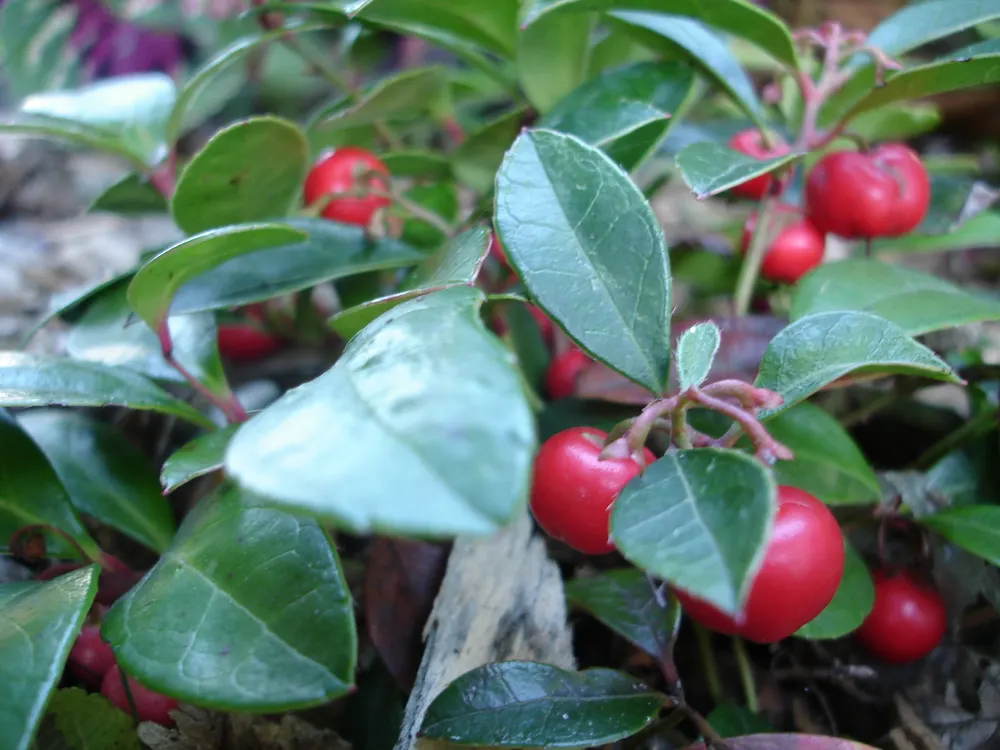
Photo: LGPL (via Wikimedia Commons)
Wintergreen
Gaultheria procumbens
Also known as Eastern Teaberry, Checkerberry, Boxberry, Mountain Tea, Ivory Plum
Key benefits
✦Traditional uses
✦Long before it flavored candy and chewing gum, wintergreen was a trusted plant of the eastern forest floor. Cherokee, Iroquois, and other northeastern nations chewed the leaves or brewed them into tea for sore throats, aching joints, and general fatigue, and rubbed the crushed leaves on tired muscles after long days of walking or hunting. During the Revolutionary War, when imported black tea grew scarce and unpopular, colonists steeped wintergreen leaves as a homegrown substitute they came to call mountain tea. Its bright, cooling scent made it as beloved in the kitchen as it was in the medicine bag.
How to grow & use it
✦The full apothecary for Wintergreen
Traditional remedies and step-by-step preparations, a complete growing guide, and how to harvest, dry, and store it, all unlocked with HerbLens Unlimited.
- ✦Remedies & preparations
- ✦ Growing guide
- ✦Harvest & storage
From under $6 a month. Free plant identifications always included.
- ✦Peppermint
- ✦Meadowsweet
- ✦Sweet birch
- ✦Sweet birch (Betula lenta)
- ✦Peppermint
“For the cool, minty hush of a pine-shaded trail, and the ache-easing traditions carried down from it.”
That familiar pink 'teaberry' candy flavor comes straight from this little forest plant, and its essential oil is so concentrated in methyl salicylate that a single dose the size of a teaspoon can be as potent as a whole bottle of aspirin tablets.
Wintergreen essential oil is almost pure methyl salicylate, and as little as a teaspoon of the pure oil can be fatal, especially to children and pets, so it should never be taken internally or applied undiluted to skin. The dried leaf makes a milder traditional tea, but it should still be avoided by anyone sensitive to aspirin, taking blood thinners, or who is pregnant or breastfeeding.