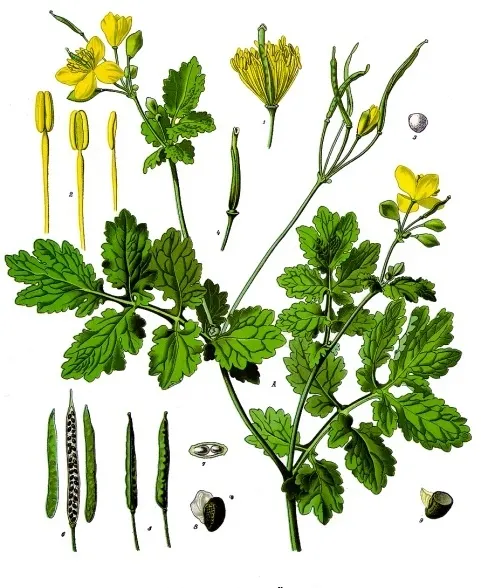
Photo: Franz Eugen Köhler, Köhler's Medizinal-Pflanzen, Public domain (via Wikimedia Commons)
Greater Celandine
Chelidonium majus
Also known as Swallowwort, Tetterwort, Nipplewort, Wartwort
Traditional uses
✦Greater celandine has followed people for centuries, springing up in the rubble of old cottages and along the foundations of ancient walls almost as if it were keeping watch. Its name comes from the Greek chelidon, meaning swallow, because old herbalists believed it bloomed when the swallows returned in spring and faded when they left. Break a stem and a startling orange-yellow latex weeps out, and it was this vivid sap, dabbed carefully onto the skin, that made the plant famous in folk tradition for troublesome warts and corns. Medieval and Renaissance herbals also praised it as a liver and eye remedy, though modern understanding of its chemistry has made herbalists far more cautious about those older uses.
How to grow & use it
✦The full apothecary for Greater Celandine
Traditional remedies and step-by-step preparations, a complete growing guide, and how to harvest, dry, and store it, all unlocked with HerbLens Unlimited.
- ✦Remedies & preparations
- ✦ Growing guide
- ✦Harvest & storage
From under $6 a month. Free plant identifications always included.
- ✦Calendula
- ✦Plantain
- ✦Yarrow
- ✦Calendula (for gentle topical skin care)
- ✦Milk thistle (for traditional liver-supportive herbalism)
“The wayside weed with a wound of gold at its stem, better admired growing wild than brought into the kitchen.”
Greater celandine's orange latex stains skin and cloth almost like a dye, and old folk names such as 'swallowwort' and 'tetterwort' (tetter being an old word for skin eruptions) both point straight back to this striking sap and its long folk association with the skin.
Greater celandine is not considered safe to take internally. It contains isoquinoline alkaloids, including chelidonine, sanguinarine, and coptisine, and documented cases of acute hepatitis and liver injury have been linked to oral use of the herb or supplements containing it, sometimes requiring hospitalization. It should be avoided entirely by anyone with liver disease, anyone taking medications processed by the liver, and by pregnant or breastfeeding women. The fresh orange latex is a strong skin and mucous membrane irritant, can cause contact dermatitis or chemical burns with prolonged exposure, and must never be used near the eyes. Because of these real risks, no internal preparations or dosing are given here. Anyone considering any use of this plant should speak with a qualified healthcare provider first, and ingestion should be avoided altogether.