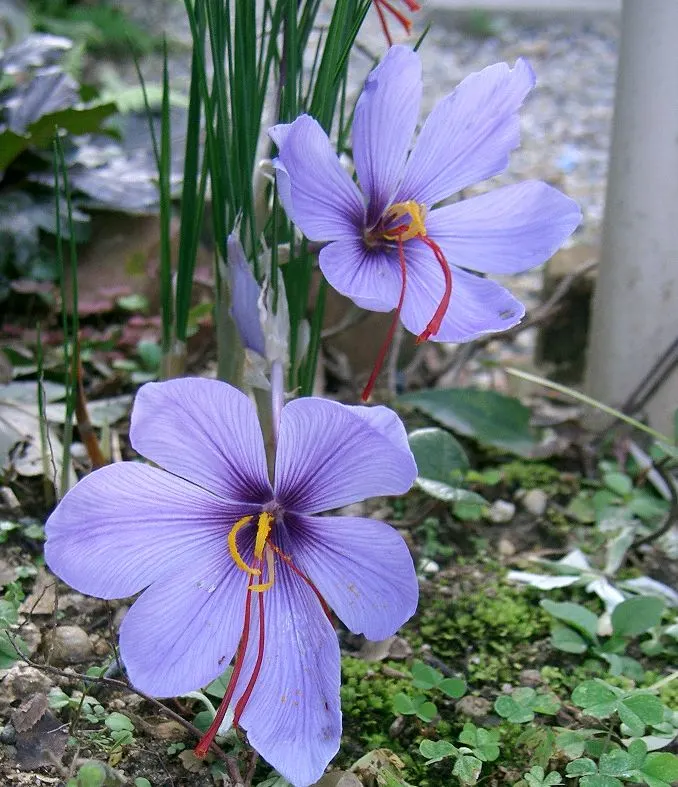
Photo: KENPEI, CC BY-SA 3.0 (via Wikimedia Commons)
Saffron
Crocus sativus
Also known as Red gold, Kesar, Zafferano, Autumn crocus (culinary, not to be confused with the poisonous Colchicum autumnale)
Key benefits
✦Traditional uses
✦Saffron has been treasured for more than three thousand years, from the frescoes of Bronze Age Crete to the royal kitchens of Persia, prized as much for its medicine as for its color and fragrance. Traditional healers across the Mediterranean, Middle East, and South Asia turned to saffron-infused milk and teas to lift the spirits during low, heavy moods, to ease the cramping and irritability of a difficult monthly cycle, and to settle a troubled stomach after a rich meal. Persian and Ayurvedic traditions alike considered it a warming tonic for the heart and the whole nervous system, taken in the smallest of pinches because its potency, and its price, demanded restraint. Because each flower yields only three fragile threads, saffron has always been a spice of ceremony as much as of the pantry, folded into celebration dishes and offered as a gift befitting royalty.
How to grow & use it
✦The full apothecary for Saffron
Traditional remedies and step-by-step preparations, a complete growing guide, and how to harvest, dry, and store it, all unlocked with HerbLens Unlimited.
- ✦Remedies & preparations
- ✦ Growing guide
- ✦Harvest & storage
From under $6 a month. Free plant identifications always included.
- ✦Cardamom
- ✦Rose
- ✦Chamomile
- ✦Turmeric (for color, not flavor)
- ✦Safflower (for color only, sometimes called 'poor man's saffron')
“For the evenings that call for a little warmth, a little gold, and a little ceremony.”
It takes about 150 flowers, hand-picked and hand-plucked, to yield just one gram of dried saffron threads, which is why it has remained the most expensive spice in the world by weight for thousands of years.
Safe in ordinary culinary amounts, but becomes toxic at high doses (roughly 5 grams or more), and large amounts have traditionally been avoided in pregnancy. It may interact with blood pressure, blood-thinning, or mood medications, and is frequently adulterated, so buy from a reliable source.