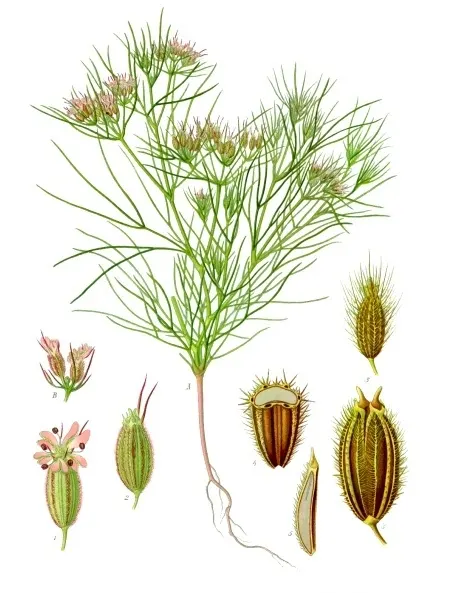
Photo: Franz Eugen Köhler, Köhler's Medizinal-Pflanzen, Public domain (via Wikimedia Commons)
Cumin
Cuminum cyminum
Also known as Jeera, Comino, Zeera
Key benefits
✦Traditional uses
✦Cumin has flavored bread, meat, and medicine since the days of ancient Egypt, Greece, and Rome, where it was so common a seasoning that Roman cookbooks called for it almost as often as modern ones call for pepper. Across the Middle East, India, and North Africa, it has long been valued as a warming digestive aid, traditionally taken after meals to ease heaviness and settle the stomach. Medieval European cooks and healers likewise kept cumin close at hand, using it in both the kitchen and the medicine chest. Its earthy, slightly bitter warmth remains one of the most recognizable flavors in the world's spice cabinets, the backbone of curry powders, chili blends, and countless regional cuisines.
How to grow & use it
✦The full apothecary for Cumin
Traditional remedies and step-by-step preparations, a complete growing guide, and how to harvest, dry, and store it, all unlocked with HerbLens Unlimited.
- ✦Remedies & preparations
- ✦ Growing guide
- ✦Harvest & storage
From under $6 a month. Free plant identifications always included.
- ✦Coriander
- ✦Turmeric
- ✦Black pepper
- ✦Caraway seed
- ✦Coriander seed
“You want to warm a dish from the inside out, the way cooks have for four thousand years.”
Whole cumin seeds were found tucked among the burial goods in ancient Egyptian tombs, including that of Tutankhamun, where they were prized both as a seasoning for the afterlife and as an embalming spice.
Cumin is safe as a culinary spice. Concentrated doses may lower blood sugar or thin the blood, so use caution with diabetes medication, anticoagulants, or before surgery.