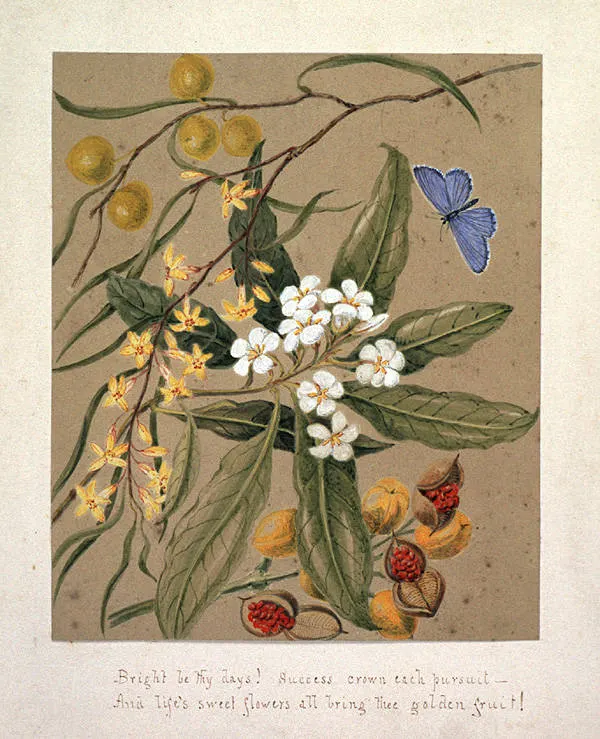
Photo: Louisa Anne Meredith, Public domain (via Wikimedia Commons)
Sweet Pittosporum
Pittosporum undulatum
Also known as Australian Cheesewood, Victorian Box, Orange Pittosporum, Native Daphne
Key benefits
✦Traditional uses
✦Sweet pittosporum earned its common name from the honeyed, orange-blossom scent its flowers release each spring, a fragrance early Australian settlers prized enough to plant the tree near homesteads and along garden paths. Its fine, pale timber became known as cheesewood because it was once cut into blocks for wood engraving and shaped into boxes and skewers used in cheese making. Aboriginal communities within its native range recognized it as a distinct feature of the wet forest understory long before European settlement, though it was not widely recorded as a plant taken internally as food or medicine. Today its story is a mixed one: cherished as a fragrant garden tree at home in Australia, but watched carefully as a fast-spreading newcomer in the many warm, humid places it has since traveled to.
How to grow & use it
✦The full apothecary for Sweet Pittosporum
Traditional remedies and step-by-step preparations, a complete growing guide, and how to harvest, dry, and store it, all unlocked with HerbLens Unlimited.
- ✦Remedies & preparations
- ✦ Growing guide
- ✦Harvest & storage
From under $6 a month. Free plant identifications always included.
- ✦Gardenia
- ✦Camellia
- ✦Citrus
- ✦Mock orange (Philadelphus)
- ✦Daphne
“For the evening in spring when the whole garden seems to exhale the scent of orange blossom.”
Sweet pittosporum's pale, tight-grained wood was once so favored for wood engraving blocks and cheese-making boxes in colonial Australia that the tree picked up the enduring nickname cheesewood, a name still used today even though the timber trade that inspired it has long since faded.
Sweet Pittosporum shouldn't be eaten: its seeds and fruit pulp contain saponins that can cause vomiting, diarrhea, and stomach upset in people and pets. Keep seeds and berries away from children and curious pets.