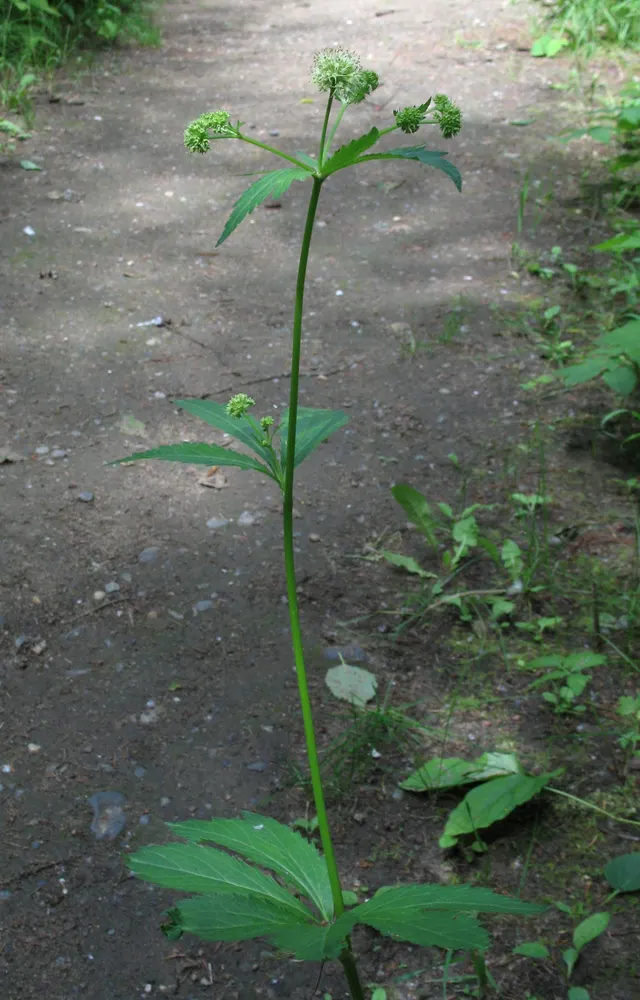
Photo: Robert Flogaus-Faust, CC BY 3.0 (via Wikimedia Commons)
Maryland Sanicle
Sanicula marilandica
Also known as Black Snakeroot, American Sanicle, Clustered Snakeroot, Common Sanicle
Key benefits
✦Traditional uses
✦Long before it had a place in any garden bed, Maryland Sanicle was quietly at work in the shaded understory of eastern forests, where Native healers and later the nineteenth century Eclectic physicians came to know its root as an alterative and astringent. It found its way into washes for wounds and skin eruptions, and into gargles meant to soothe an inflamed throat. Its common name, black snakeroot, echoes an old folk hope that the root could counter snakebite, a belief tied more to hard times and hope than to any tested fact, and one that should never be relied upon today. What survives is a quieter reputation, that of a humble woodland plant once trusted for cleaning and mending the skin.
How to grow & use it
✦The full apothecary for Maryland Sanicle
Traditional remedies and step-by-step preparations, a complete growing guide, and how to harvest, dry, and store it, all unlocked with HerbLens Unlimited.
- ✦Remedies & preparations
- ✦ Growing guide
- ✦Harvest & storage
From under $6 a month. Free plant identifications always included.
- ✦Yarrow
- ✦Self-heal
- ✦Plantain
- ✦Self-heal (Prunella vulgaris)
- ✦Yarrow (Achillea millefolium)
“For the quiet, shade loving healer of the old woodland pharmacy.”
The genus name Sanicula comes from the Latin sanare, meaning to heal, a name given by old world herbalists who trusted the wound mending reputation of this small genus long before botanists ever crossed the Atlantic to meet its American cousin.
Maryland sanicle belongs to the carrot family, which also includes poison hemlock and water hemlock, so never gather it from the wild unless identification has been confirmed by an experienced forager. It has had very little modern safety research.