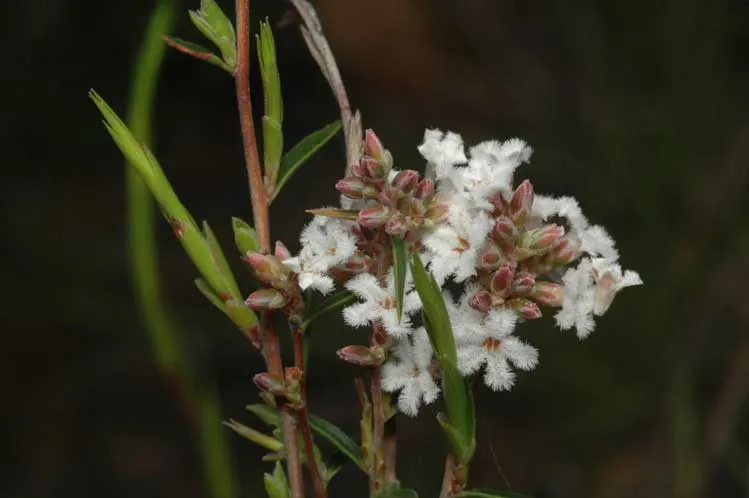
Photo: Murray Fagg, CC BY 3.0 au (via Wikimedia Commons)
Common Beard Heath
Leucopogon virgatus
Also known as Beard Heath
Key benefits
✦Traditional uses
✦Common Beard Heath belongs to a large Australian genus whose small, sweetish fruits were gathered as bush tucker by Aboriginal peoples in various regions, a quiet thread of foraging knowledge that runs through many Leucopogon species. Specific historical records naming Leucopogon virgatus itself are sparse compared to its showier or fruitier relatives, and no established medicinal use has come down to us for this particular species. Its real legacy has been as part of the woodland understory, a modest, wiry shrub that flowers early and feeds the insects and small birds moving through the eucalypt bush long before the more conspicuous wildflowers appear. Today it is chiefly valued by native plant gardeners and bushwalkers for that same quiet, early-season presence.
How to grow & use it
✦The full apothecary for Common Beard Heath
Traditional remedies and step-by-step preparations, a complete growing guide, and how to harvest, dry, and store it, all unlocked with HerbLens Unlimited.
- ✦Remedies & preparations
- ✦ Growing guide
- ✦Harvest & storage
From under $6 a month. Free plant identifications always included.
“For the quiet, needle-leaved shrub that dusts the late-winter bush with tiny bearded stars.”
The genus name Leucopogon comes from the Greek leukos, meaning white, and pogon, meaning beard, a nod to the tiny white hairs fringing the inside of each flower's petal lobes, which give the blossoms their soft, bearded look up close.
Common beard heath has no documented history of being eaten or used medicinally, so it shouldn't be ingested or applied to skin without expert identification.