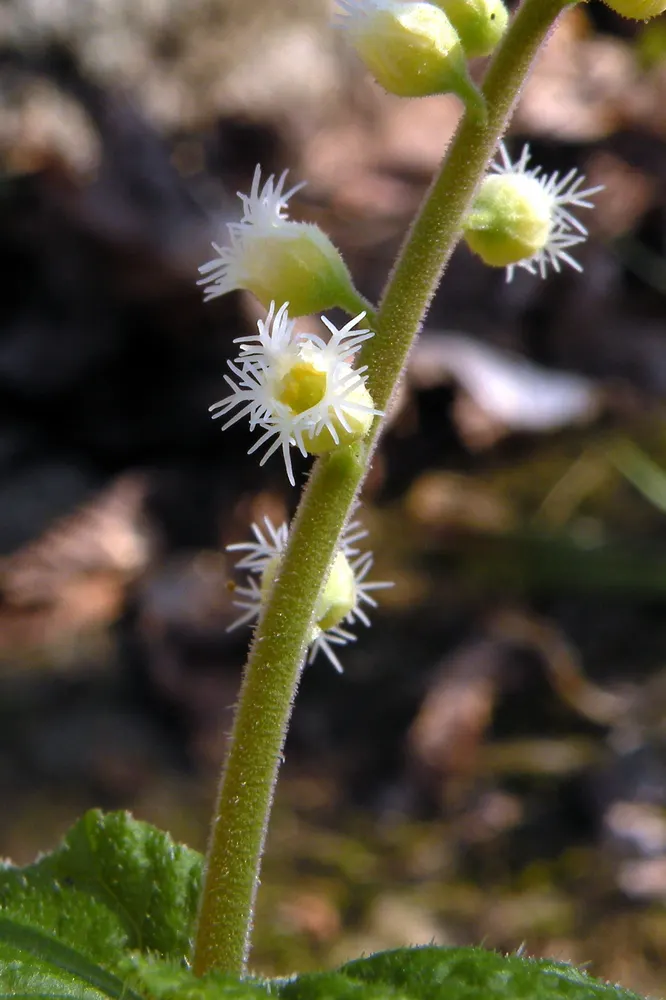
Photo: Doug McGrady from Warwick, RI, USA, CC BY 2.0 (via Wikimedia Commons)
Two-Leaf Miterwort
Mitella diphylla
Also known as Bishop's Cap, Fairy Cup, Coolwort
Key benefits
✦Traditional uses
✦Two-leaf miterwort grew quietly in the shaded understory long before it found its way into any garden bed, and it was the Iroquois who first put it to use, brewing the leaves into a gargle for sore mouths and throats and into a tea thought to support the kidneys. It never became a headline herb the way its showier woodland neighbors did, but it earned a steady, unassuming place in the home remedy chest of the communities who lived closest to it. Today it is treasured far more for its quiet beauty in the shade garden than for its medicine chest, a plant whose modest history is as delicate as its flowers.
How to grow & use it
✦The full apothecary for Two-Leaf Miterwort
Traditional remedies and step-by-step preparations, a complete growing guide, and how to harvest, dry, and store it, all unlocked with HerbLens Unlimited.
- ✦Remedies & preparations
- ✦ Growing guide
- ✦Harvest & storage
From under $6 a month. Free plant identifications always included.
- ✦Wild Ginger
- ✦Foamflower
- ✦Wintergreen
- ✦Foamflower (Tiarella cordifolia)
- ✦Heuchera (coral bells) leaf
“You want to slow down and notice the small, snowflake-carved things growing at your feet.”
Each tiny flower looks like it was cut with tiny scissors, its five petals branch into delicate fringed threads so fine that early botanists compared the whole bloom to a miniature snowflake, which is how the plant earned both its common name, from the miter-shaped seed capsule, and its old nickname, fairy cup.
Two-leaf miterwort has no documented toxicity and no significant safety concerns at traditional amounts.