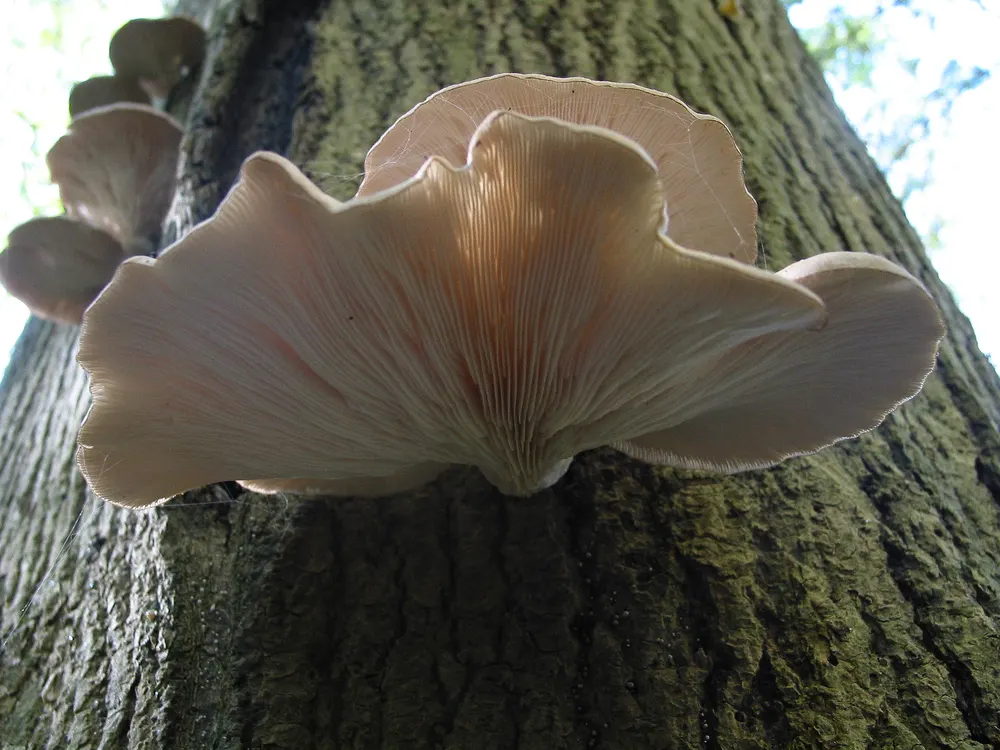
Photo: voir ci-dessous / see below, CC BY 3.0 (via Wikimedia Commons)
Oyster Mushroom
Pleurotus ostreatus
Also known as Tree Oyster Mushroom, Pearl Oyster Mushroom, Hiratake
Key benefits
✦Traditional uses
✦Long before it appeared in modern grocery stores, the oyster mushroom was gathered from fallen logs by foragers who prized it as a hearty, meat-like food during the lean months of late autumn. In traditional Chinese and East Asian herbal practice, it was valued as a tonic food thought to support vitality, healthy digestion, and the body's natural defenses. Because it fruits so readily on wood, it became one of the first mushrooms people learned to cultivate deliberately, turning a wild forest treasure into a dependable household staple. Today it is one of the most studied culinary mushrooms in the world, admired by herbalists and cooks alike for its delicate, almost briny flavor and its generous texture.
How to grow & use it
✦The full apothecary for Oyster Mushroom
Traditional remedies and step-by-step preparations, a complete growing guide, and how to harvest, dry, and store it, all unlocked with HerbLens Unlimited.
- ✦Remedies & preparations
- ✦ Growing guide
- ✦Harvest & storage
From under $6 a month. Free plant identifications always included.
- ✦Astragalus
- ✦Reishi
- ✦Ginger
- ✦Shiitake
- ✦Maitake
“For the cook who wants something that tastes of the forest floor after rain, humble, hearty, and quietly nourishing.”
Oyster mushrooms are quietly carnivorous. Their mycelium secretes a toxin that paralyzes microscopic roundworms in the wood, then digests them for extra nitrogen, an unusual trick for something that looks so gentle on the plate.
A safe, popular food when cooked, but always confirm identification, since oyster mushrooms have been confused with the toxic jack o'lantern mushroom.