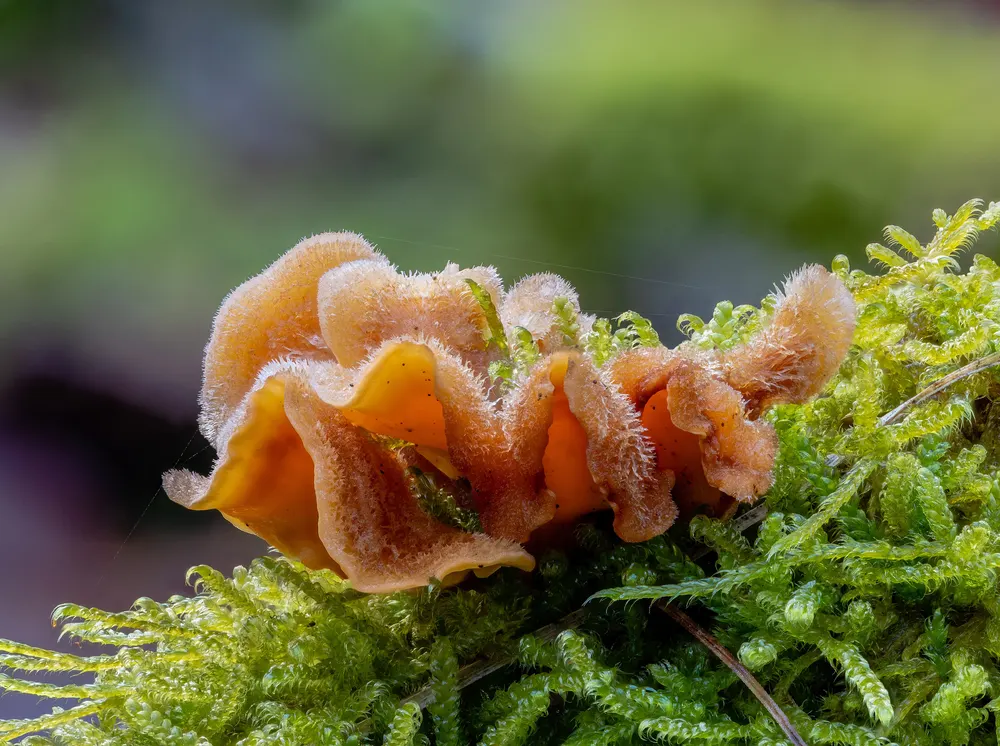
Photo: Ermell, CC BY-SA 4.0 (via Wikimedia Commons)
Hairy Curtain Crust
Stereum hirsutum
Also known as False Turkey Tail, Hairy Stereum, Golden Curtain Crust
Key benefits
✦Traditional uses
✦Stereum hirsutum has no real place in traditional herbal medicine or the kitchen; it is far too thin, tough, and leathery to eat, and old herbals simply pass over it. Its true value has always been ecological rather than medicinal. Foresters and naturalists have long read its cheerful orange fans as a sign that a fallen branch is doing exactly what it should, quietly rotting down and returning its nutrients to the forest floor. Some natural dyers and mushroom crafters have also gathered its tough, weather-resistant brackets for pressed nature displays and mild dye work, prizing it more for its ruffled shape and color than for any curative reputation.
How to grow & use it
✦The full apothecary for Hairy Curtain Crust
Traditional remedies and step-by-step preparations, a complete growing guide, and how to harvest, dry, and store it, all unlocked with HerbLens Unlimited.
- ✦Remedies & preparations
- ✦ Growing guide
- ✦Harvest & storage
From under $6 a month. Free plant identifications always included.
- ✦Turkey Tail (Trametes versicolor)
- ✦Witch's Butter (Tremella mesenterica)
- ✦Jelly Ear (Auricularia auricula-judae)
- ✦Turkey Tail (Trametes versicolor), a true pored polypore often confused with this species from a distance
“Look for it after an autumn rain, when a fallen oak or hazel branch is suddenly ruffled with tiers of small, fuzzy, orange-edged fans, as if the wood itself had grown feathers.”
The species name hirsutum is Latin for "hairy," a nod to the fine, felted down that covers the upper surface of each cap. Run a thumb across a fresh one and you can feel it, while the smooth underside beneath stays bright egg-yolk orange until it dries and weathers to a dull gray-brown.
Hairy curtain crust is not poisonous but isn't eaten either, since it's thin, tough, and has no culinary use; handling large dried collections can release spores that bother people with mold or asthma sensitivities.