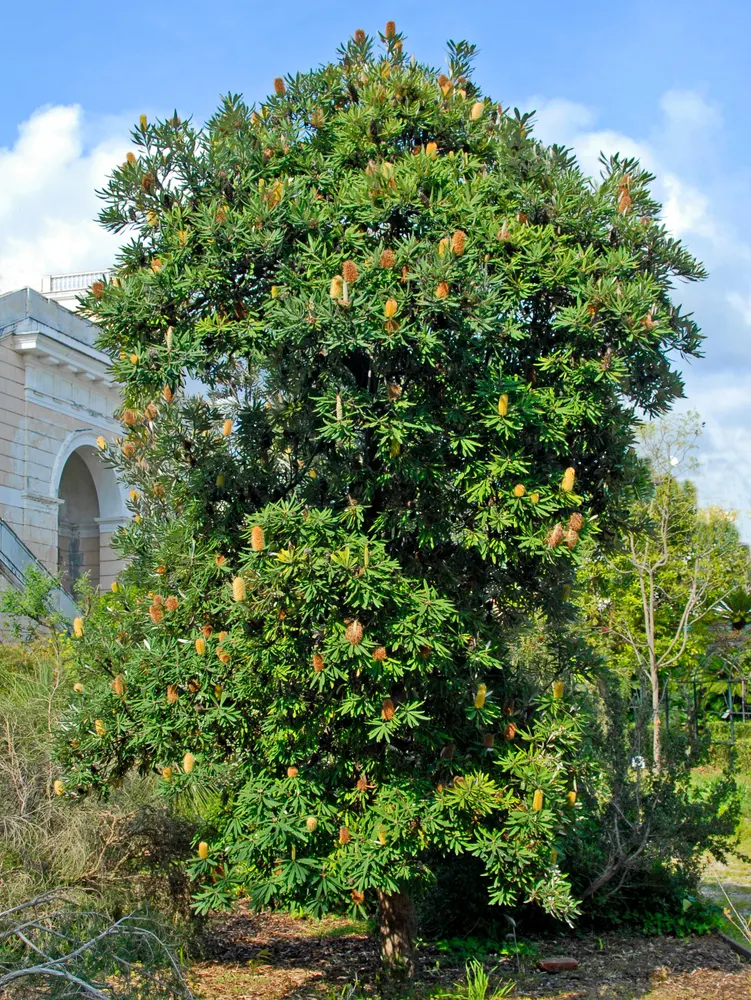
Photo: Hectonichus, CC BY-SA 3.0 (via Wikimedia Commons)
Saw Banksia
Banksia serrata
Also known as Old Man Banksia, Saw-tooth Banksia, Red Honeysuckle
Key benefits
✦Traditional uses
✦Along the sandstone coasts of New South Wales, Aboriginal communities gathered the nectar-heavy flower spikes of the saw banksia and dipped or swirled them in water to draw out a sweet, honey-like drink, a bush cordial enjoyed fresh and sometimes left to ferment lightly. The tough, woody seed cones that follow the flowers were put to practical use as scoops, fire fans, and rough combs once their seeds had fallen. Early colonists took to calling it red honeysuckle for that same nectar sweetness, and the tree's odd, watchful seed pods later found lasting fame as the whimsical, slightly menacing Banksia men of May Gibbs's Australian children's stories.
How to grow & use it
✦The full apothecary for Saw Banksia
Traditional remedies and step-by-step preparations, a complete growing guide, and how to harvest, dry, and store it, all unlocked with HerbLens Unlimited.
- ✦Remedies & preparations
- ✦ Growing guide
- ✦Harvest & storage
From under $6 a month. Free plant identifications always included.
- ✦Grevillea
- ✦Bottlebrush (Callistemon)
- ✦Correa
- ✦Coast Banksia (Banksia integrifolia)
- ✦Heath-leaved Banksia (Banksia ericifolia)
“For a coastal garden humming with honeyeaters, and a taste of old bush sweetness.”
The gaping, whiskered seed cones of Banksia serrata, split open with rows of hollow eyes and grinning mouths, were the direct inspiration for the villainous 'Big Bad Banksia Men' in May Gibbs's classic Australian tale Snugglepot and Cuddlepie.
Banksia serrata is not documented as toxic, but it also has no established history as a medicinal herb; the nectar-water drink described here is a traditional bush-food practice, not a therapeutic remedy, and has not been studied for health effects. The woody seed cones and seeds are not food and should never be chewed or swallowed. Flowering banksias attract heavy bee and insect activity, so those with insect-sting allergies should take care when harvesting. As with any traditional plant preparation, and especially during pregnancy, nursing, or with any existing health condition, speak with a qualified healthcare professional before use.